Today’s title is lifted from the “Tears in rain” speech made by Rutger Hauer’s character, Roy Batty, in Ridley Scott’s 1982 masterpiece, Blade Runner. We moved from Kyoto to Osaka on Saturday so we’re having a Saturday night in the city that inspired much of the set design for that movie. It was also the setting for Scott’s later (underrated) Black Rain.
Before we get to the neon glitz and 3D animated restaurant signs, we first had to manage the journey. When we arrived in Kyoto, we took a taxi from the main station to our ryokan but, after two days of eating nothing but Japanese food, I felt prepared to meet any challenge the transport system may have for us. After breakfast, we packed up and checked out. We then walked down to the nearest subway station. I have been very impressed by the widespread availability of elevators in stations. They are very helpful when, between us, we have two suitcases, a dobro, a mandolin, a camera backpack, a handbag and a man-bag. The lift helped ease us down to the right platform for a subway to Kyoto train station.
Once there, we decided that we would take a local train that would take us direct to Osaka station. Our pass entitled us to take the bullet train, which is faster, but it stops at a station called Shin-Osaka where we would have to change to get to Osaka so we decided the convenience was worth the slower journey. We got to Osaka at around 11:30 and we were booked at an AirBnB where we couldn’t check in until 3:00pm. Luckily, all Japanese stations are equipped with a vast array of luggage lockers and a left luggage counter, so we were able to store all of our bags and start being tourists immediately.
Well, immediately after a cup of English Breakfast tea, which wasn’t available at the ryokan so we were going a bit cold turkey for a proper cuppa. Over our tea, we looked at what was available for us to go and visit, and settled on the Osaka Museum of Housing and Living. This was a short subway ride away and, once again, our Pasmo cards worked seamlessly on the Osaka urban transport system.


The museum itself featured scale models of Osaka showing its growth over the centuries. It also had a full scale reproduction of some city streets that we could walk through and learn a little more about Japanese life in the mid-19th century. It’s not a huge museum but well worth a visit if you have an hour or two to kill in Osaka. After the museum, we went for a stroll down a covered market street. I was impressed by the effort that went in to this particular drain cover:
 We’ve since seen a few more cast in the same way but this is the only one so far that’s been painted. This street also gave me the opportunity to try another typical Japanese activity: Pachinko. The aim of the game is to fire little silver balls into a hole. I played for about 15 minutes and still have no idea how it works. I see no need to attempt a repeat experience.
It was time to head to our AirBnB which is a short walk away from Fukushima station on the JR Osaka Loop Line. Because it’s a JR line, we were able to travel for free with our rail passes. The flat is best described as compact, but that is what we were expecting from Japan so it didn’t come as a shock. After settling in and buying some of life’s necessities (tea bags and milk), we decided to head out for dinner. I was keen on some comfort food, so we found a little Italian place just around the corner from the flat. It had a Google Rating of 4.5 from 148 reviews, which is pretty decent for that number of reviews. We arrived at 5:20pm, and there was already a line of people waiting to get in when it opened at 5:30.


The pizza was amazing. The patron/chef/waiter is a one man whirlwind. There is no other staff. You order your pizza from him at the counter. You tell him what you want to drink, then you help yourself to the drink and open it yourself. Regalo is highly recommended if you find yourself in Osaka in need of a pizza.
After dinner, we really had to pay a visit to Dotonbori, the canal-side area famous for its neon signs, animated large scale food reproductions and vast quantity of restaurants.


There is a remarkable Japanese word, Kuidaore, meaning to ruin oneself by extravagance in food. It seems to have been coined for Dotonbori.
The most famous sign of all in this area is the Glico running man, which has been a Dotonbori icon for over 80 years.

After taking this shot, we strolled along the main drag and, at one point, we were stopped by a young Australian lady who asked if we had seen the running man. She had somehow missed it and needed directions which we were able to provide.
I’m amazed by how completely different a feel there has been to each of the Japanese cities we’ve visited so far. I’ve discovered, however, that the Japanese themselves perceive residents of each city to have differing vices. As mentioned above, it’s food here in Osaka. In Kyoto, it’s clothing – specifically kimonos. And in Tokyo? Footwear apparently. They love a shoe over there.
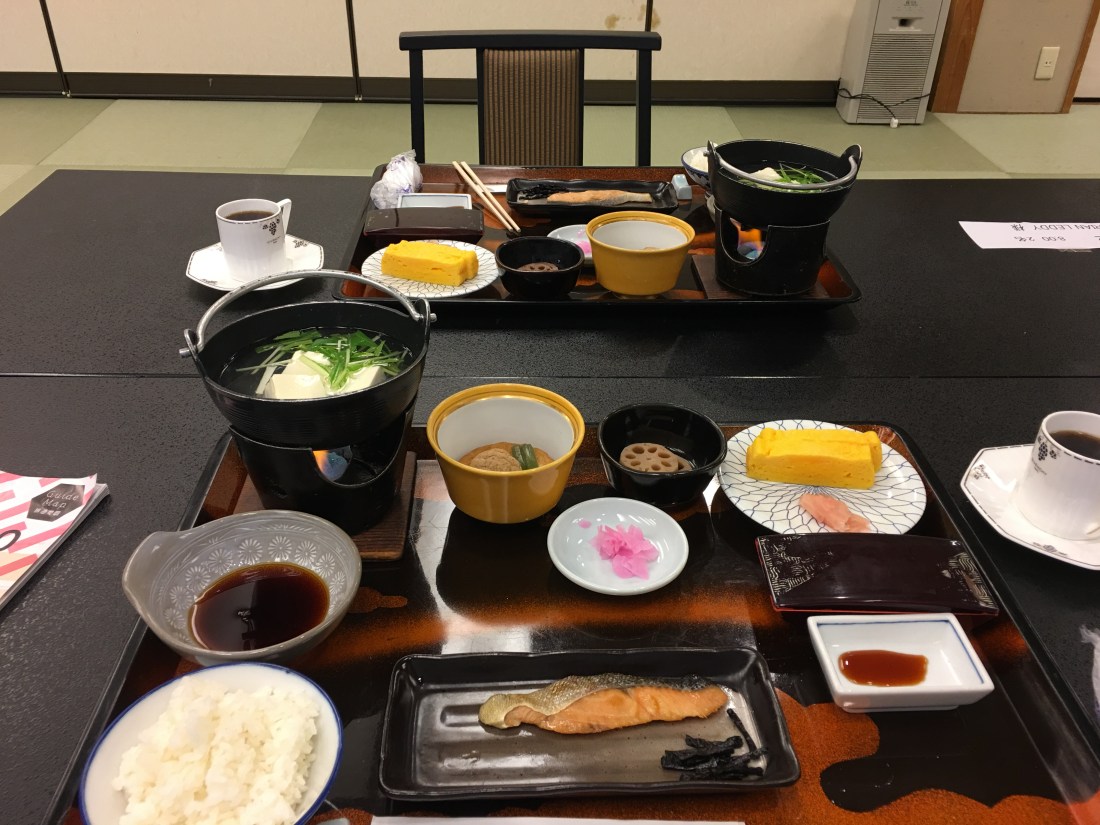 You can imagine how excited I was to see the big lump of cured fish right in front of me, plus the spirit burner cooking the tofu in the top left corner of my tray. I surprised myself with how much of this little lot I managed to eat. I really am a man of simple tastes but, on the other hand, when faced with the choice of eating what’s there or going hungry I will avoid peckishness.


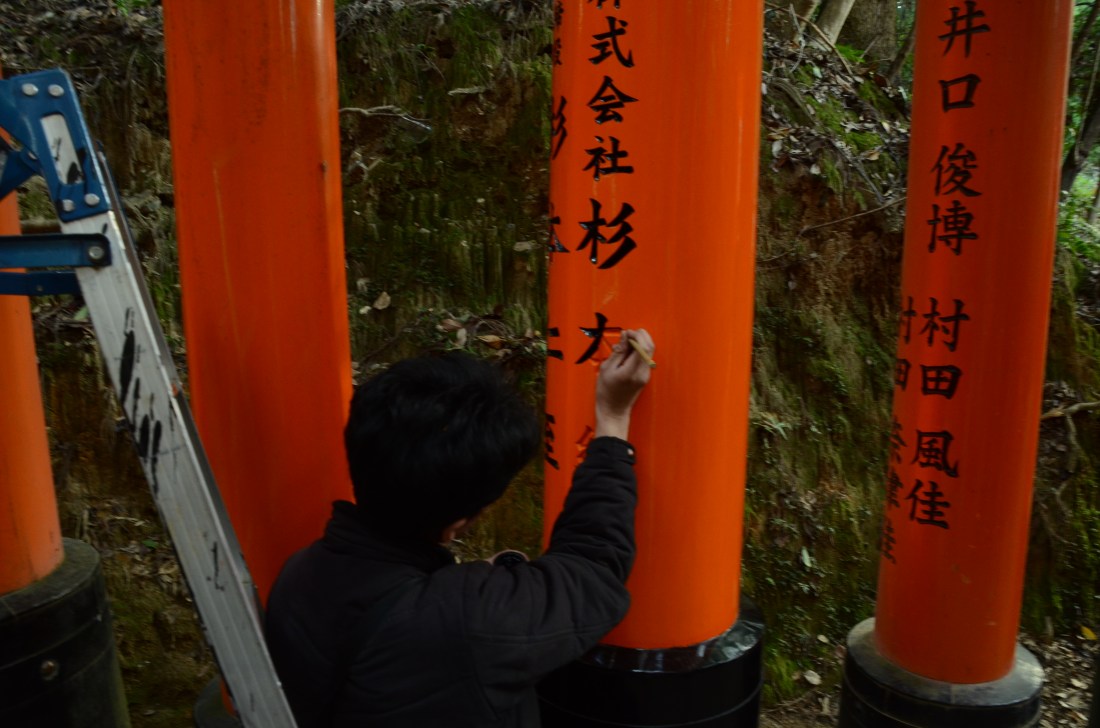
 And back down again, of course. The path to the shrine is a fascinating feat, not only of construction but of maintenance. The entrance to an Inari shrine is usually marked by a torii, or gate, painted in vermilion. But this is the head shrine, so one gate isn’t nearly enough.
 But in a country as humid as Japan, wooden structures on this scale require constant monitoring and repair. Many of the columns have visible damage but there are regular reminders of the work being undertaken to maintain the pristine appearance of the walk to the top.
 After the climb and descent, we were back on the subway and back to the ryokan. After stopping off for a quick beer because, frankly, we deserved it.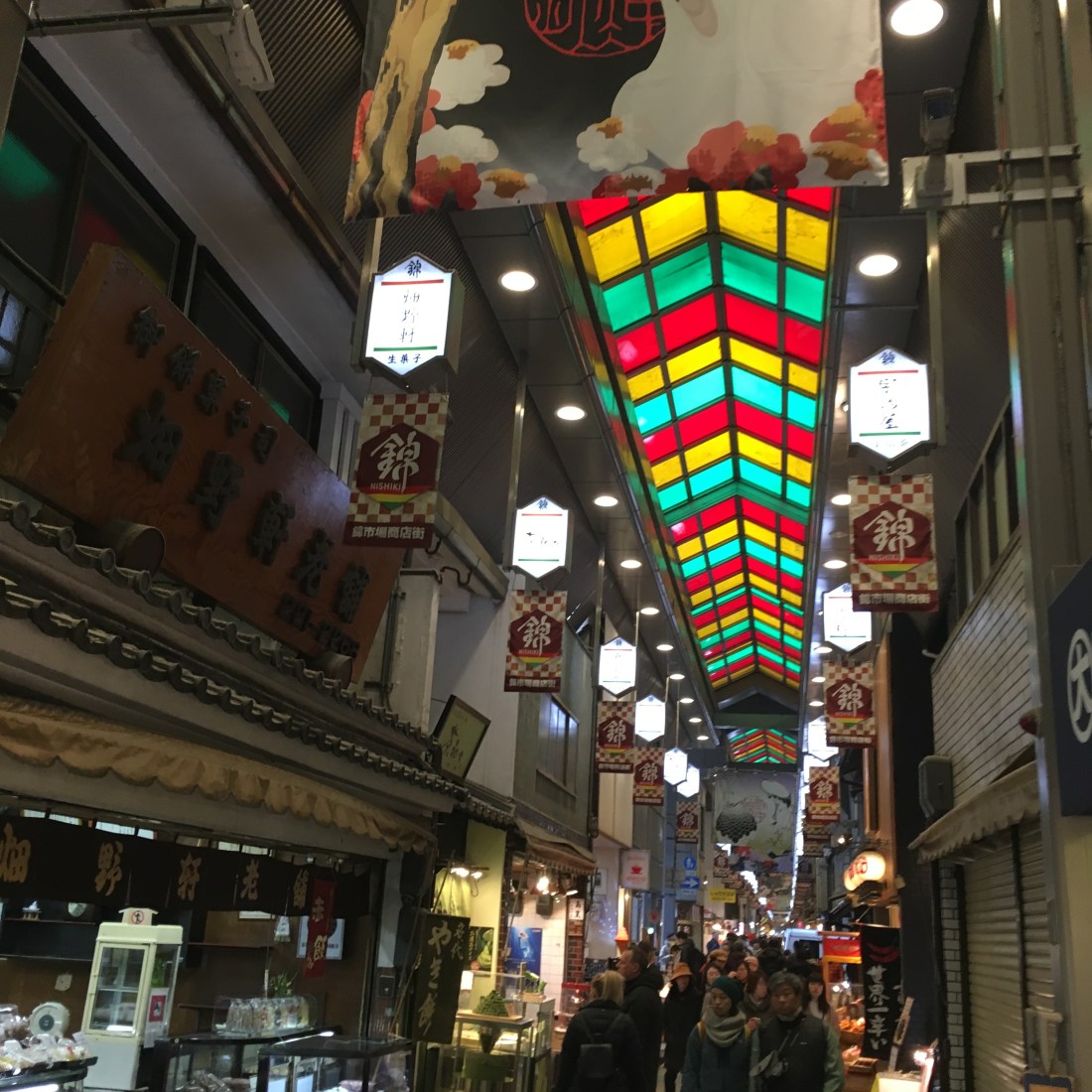


 Another aspect of the inn is the availability of communal baths where guests can go and cleanse themselves. Ishbel and I both took advantage of this facility after arriving and it turned out that we were each the only people in our respective, gender segregated baths. Afterwards, we dressed in our Yukata – an indoor kimono type of robe. Once we were dressed in these, I changed back to western clothes. I realised that we would be required to sit cross legged on the floor to eat dinner, and the yukata barely covered my modesty when seated in a sedate western fashion. It would certainly result in overexposure if I were to wear it while dining.
 You may be able to spot here a considerable quantity of raw fish on the plate in front of Ishbel. Also, that thing in the sauce on the plate at the left of the picture is a fish head. Well, I ordered it so I had to live with the consequences. It turns out the fish head had quite a bit of fish meat on it and the sauce was quite delicious. Most of the raw fish was reasonably pleasant and the tempura was good. Surprisingly, I was able to eat enough so that I didn’t feel the need to sneak out for a burger later in the evening. Ishbel had no qualms about any of it of course.




 It was an easy walk back to our flat from here and, as we strolled and chatted, it suddenly struck us why Tokyo taxis look so odd.
 It’s a long time since UK cars were built with wing mirrors on the actual wings of the car. We didn’t figure this out for ages but once you notice, it really does look odd.
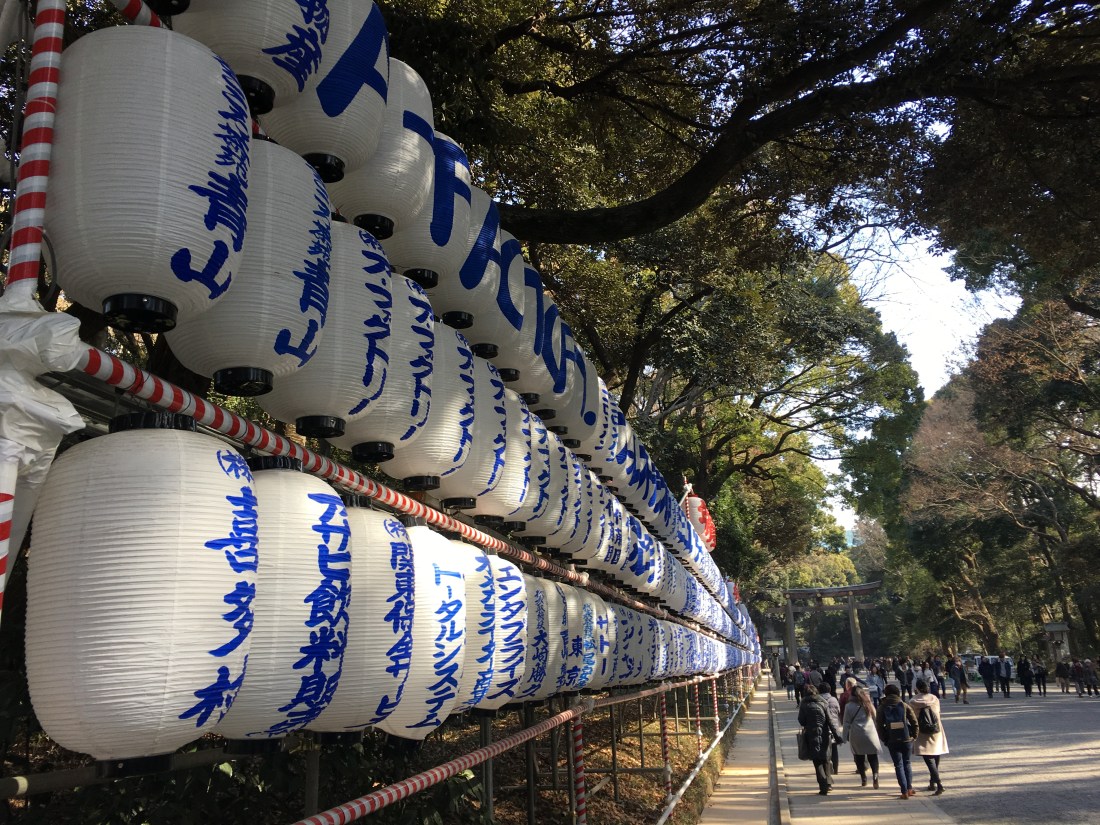
 That’s why there were several barrels of burgundy donated as part of the consecration ritual for the shrine.
 After getting back down to ground level, we took a little stroll around the area. There’s an interesting phenomenon here around how restaurants attract passing trade. Some of them have menus with pictures on them which allow non-Japanese speakers like ourselves to simply point and smile to get what we want. Others go one better.
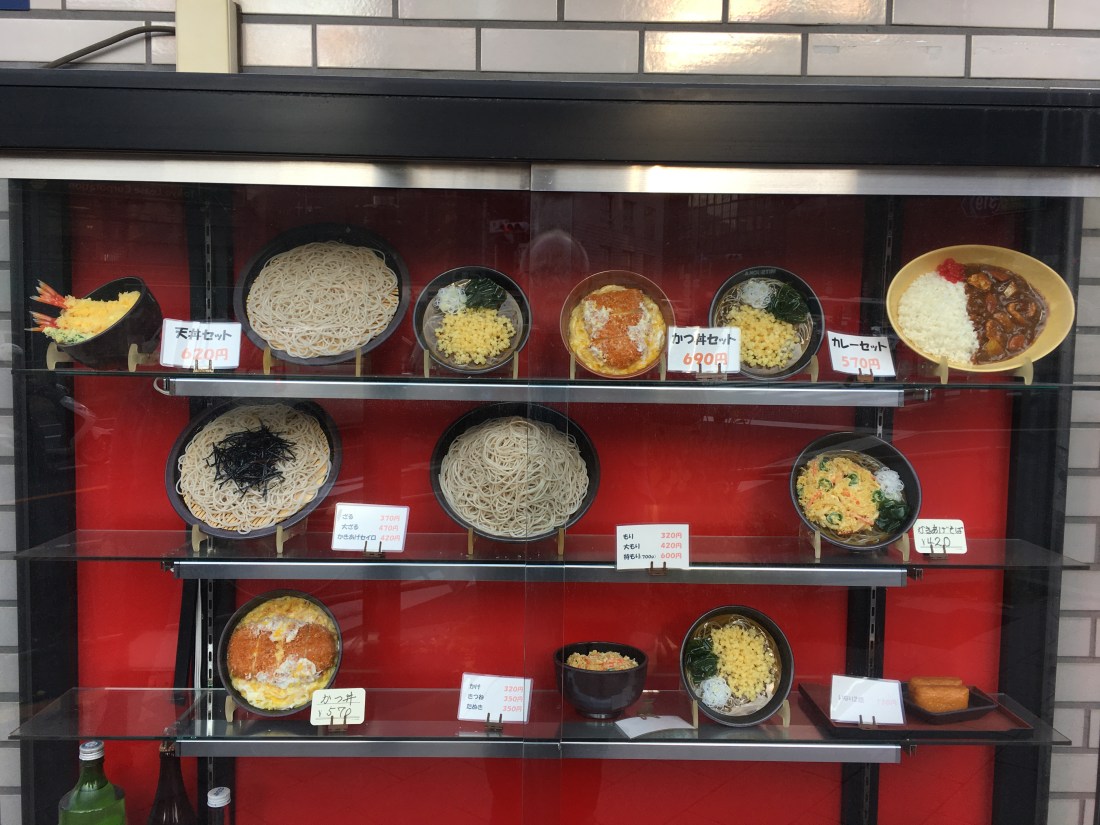 They display what I sincerely hope are artificial reproductions of the food available inside. This isn’t something I’ve ever encountered before and I really like it.
 Landing in Tokyo, we were quickly through immigration and the bags were waiting for us when we got to baggage reclaim. Then we were straight out through customs and facing, once again, a land where we don’t speak a word of the language or read a letter of the alphabet. Not quite true. We now recognise one character, which is the same in both Chinese and Japanese: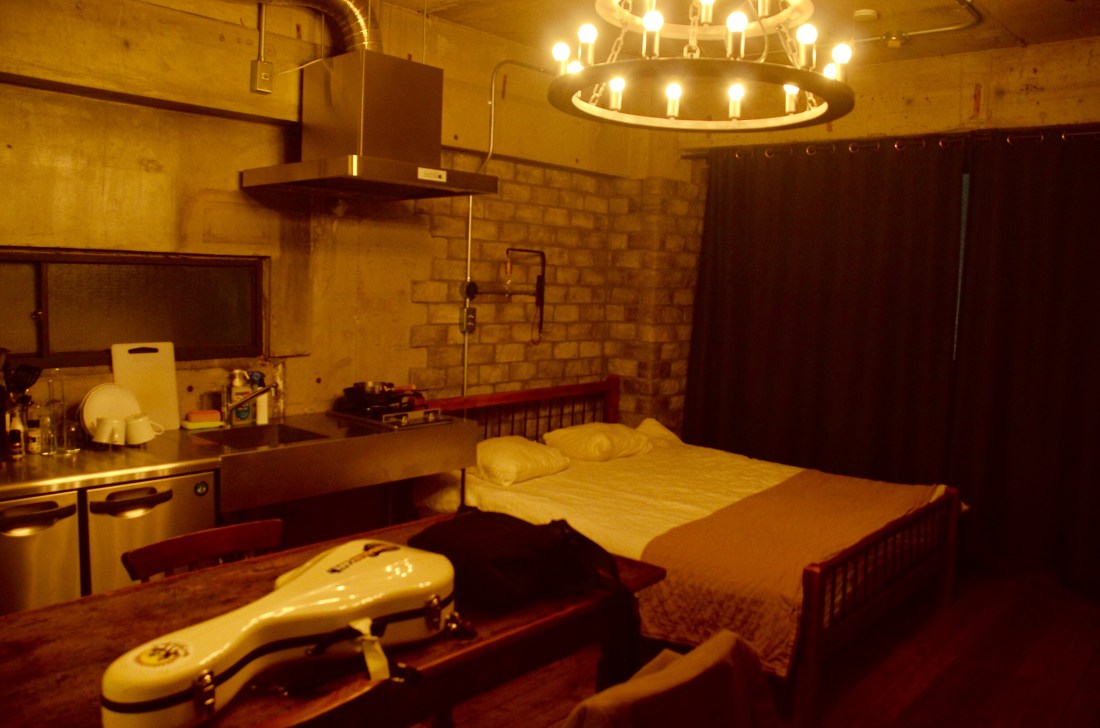
 We then had the interesting task of figuring out how to flush the toilet. I had been warned about this in advance by a colleague who had recently visited Japan but any pearls of wisdom he provided had since deserted me.
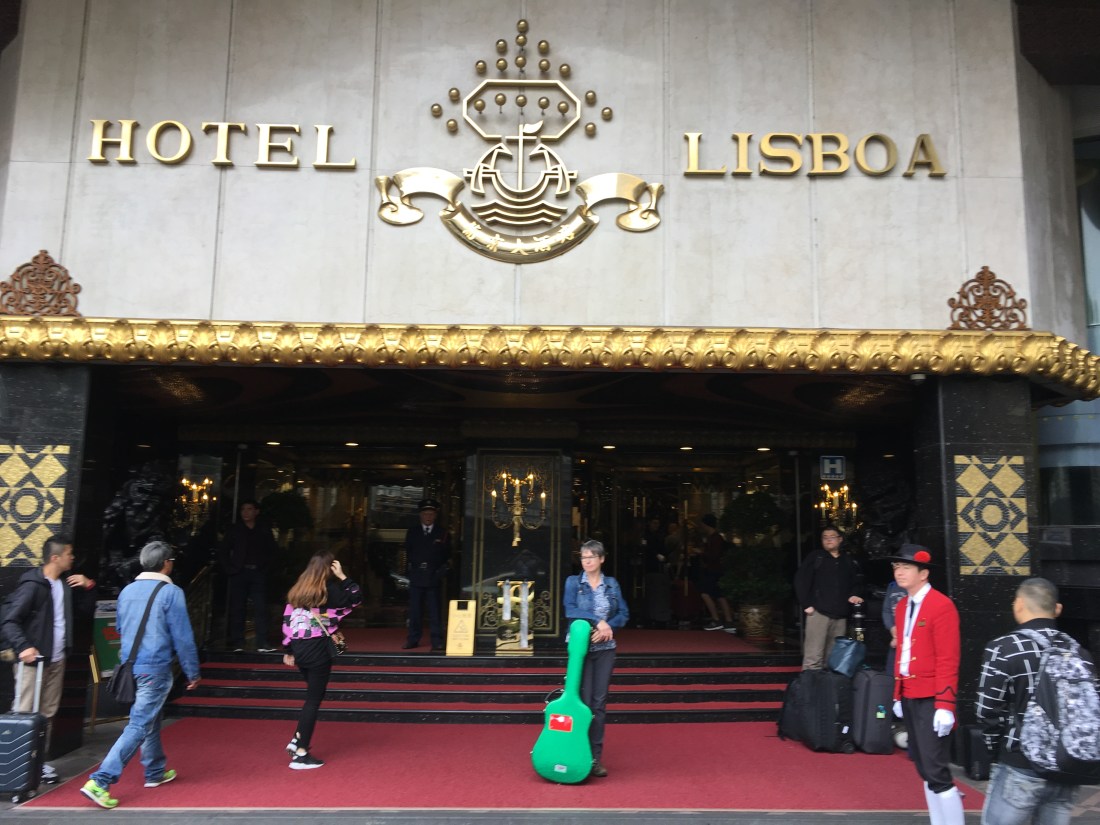 We were waiting at the hotel for the complimentary bus service to the ferry terminal to catch our transfer to Hong Kong. It duly arrived and we bought our tickets and checked the two suitcases and the guitar case. The mandolin and the camera case always travel as hand luggage no matter where we go.
 We’d had enough of the hurly burly for the time being so we just had a burger and beer in one of the hotel restaurants then had an early night in anticipation of the next leg of the trip. Tokyo tomorrow.
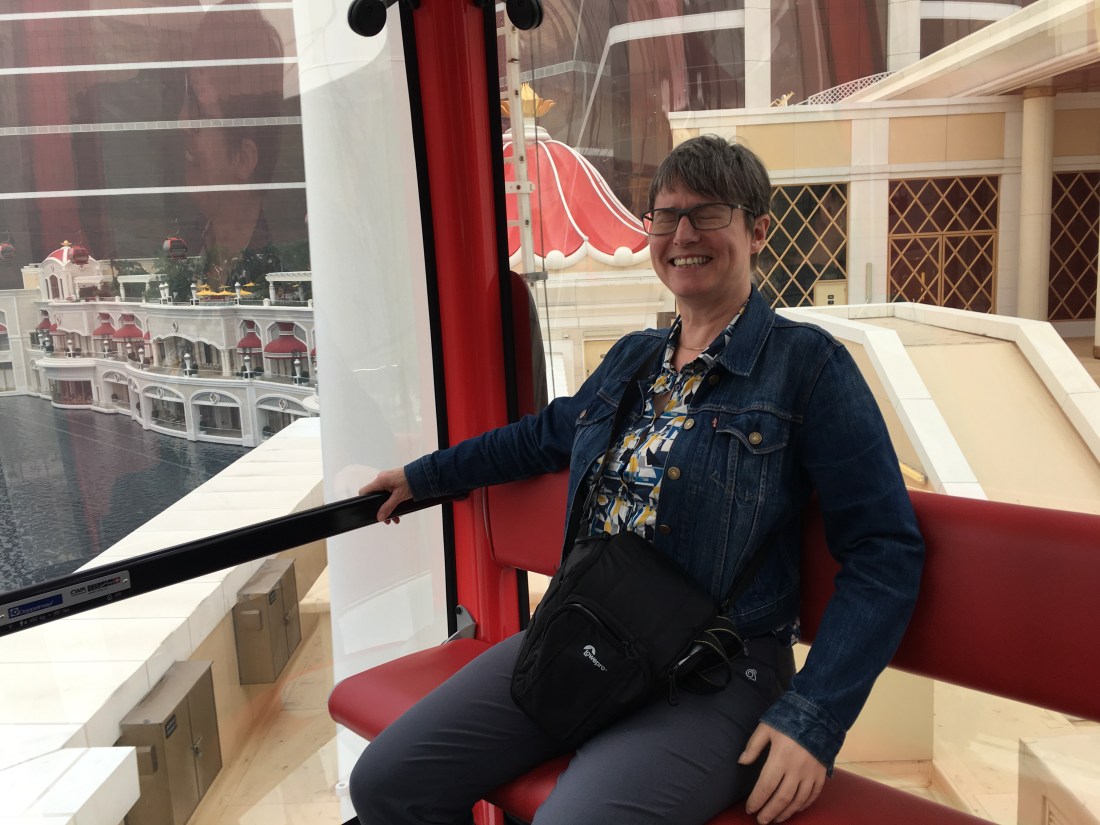
 Across the water, there’s the old settlement of Taipa and the area where there appears to be a concerted attempt to reconstruct the Las Vegas Strip: Cotai. We think of ourselves now as experienced Vegas visitors so we decided to head over there and see what all the fuss was about. There are a number of free shuttle buses that run between casinos in the same family group, so we walked over to Wynn (which is built to look exactly the same as its Vegas namesake) and hopped on the bus to Wynn Palace in Cotai.
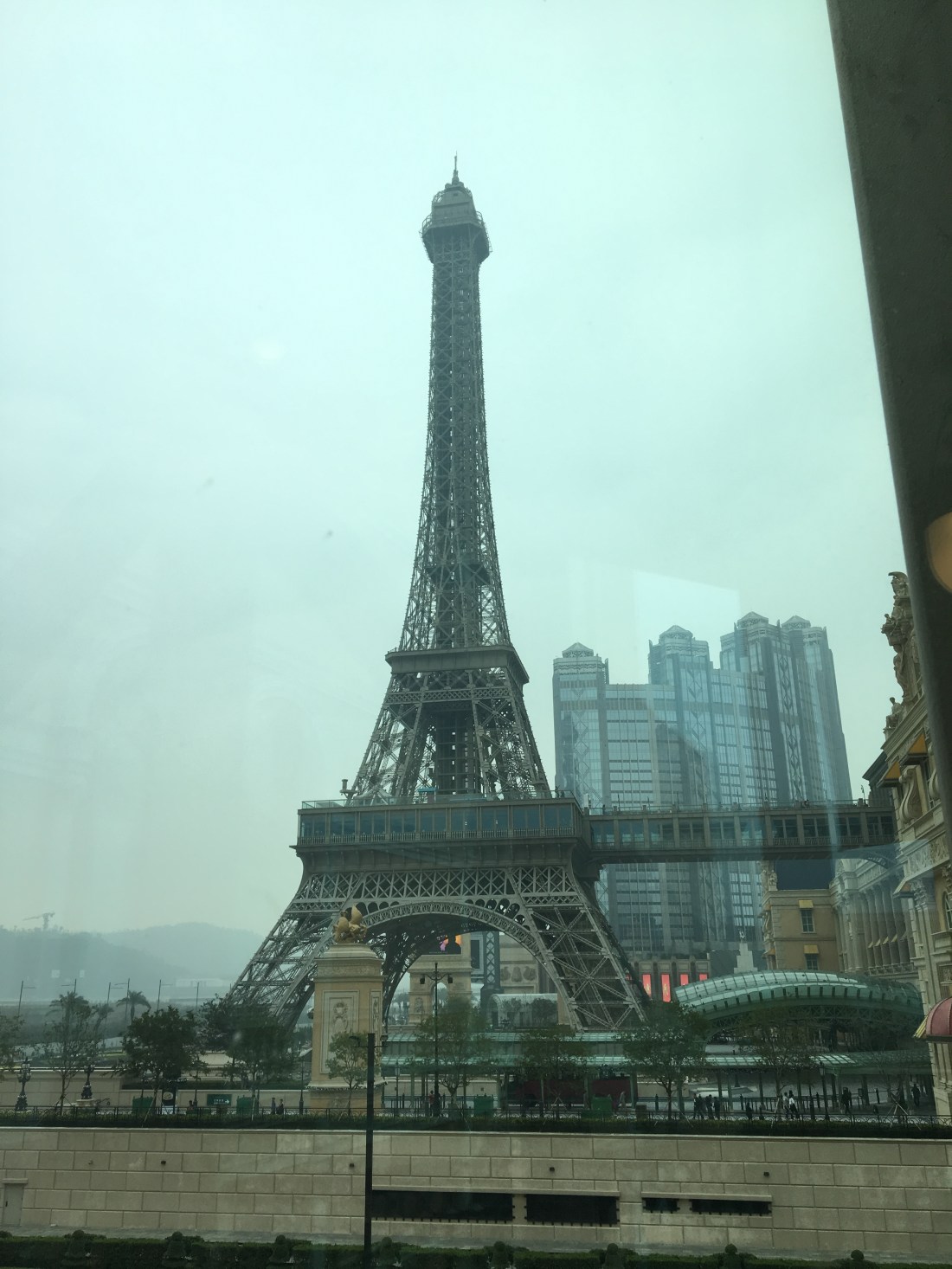 As we walked from the Venetian to the Parisian, Ishbel and I engaged in a lively debate about whether the Macau Eiffel Tower was bigger than the Vegas Eiffel Tower. It turns out they’re both roughly half the size of some kind of homage tower in Paris.
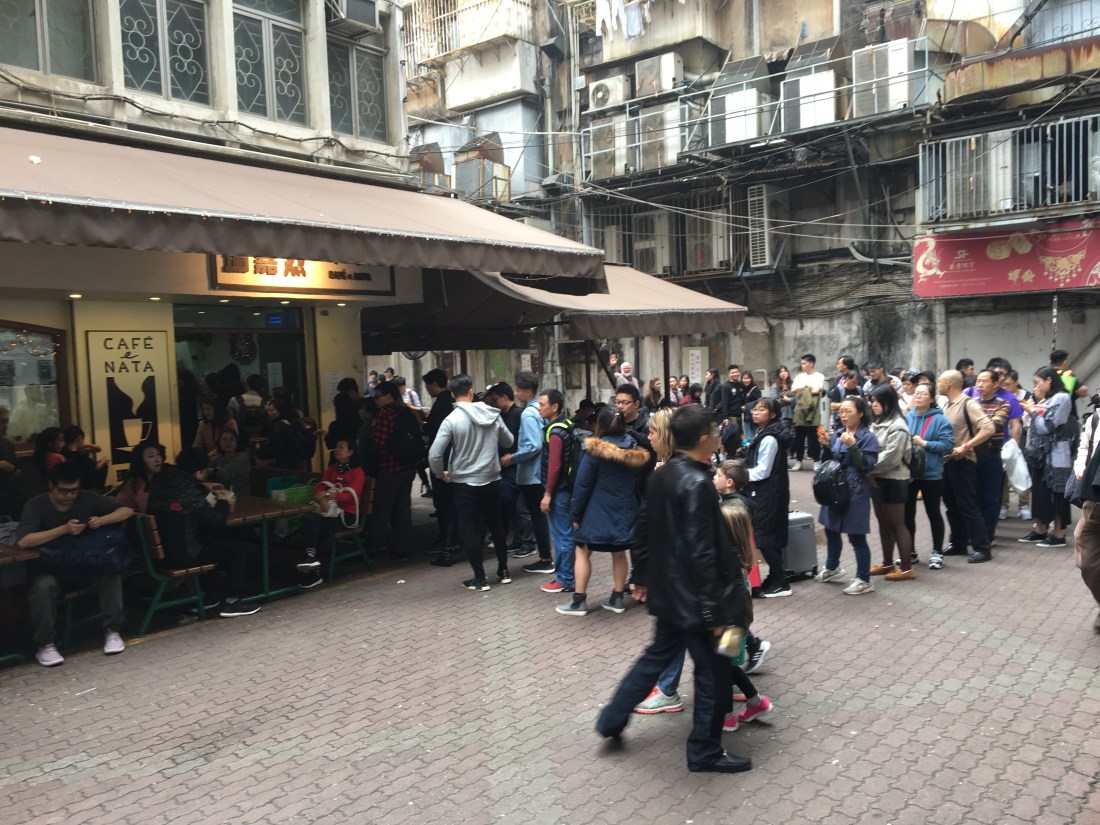 Close inspection of this photo will reveal two things: one is my (relatively) towering presence at the back of the ridiculously long line; the other is the astoundingly cavalier attitude of Macau residents to electrical wiring, and cable management generally. So much so that it merited a close-up.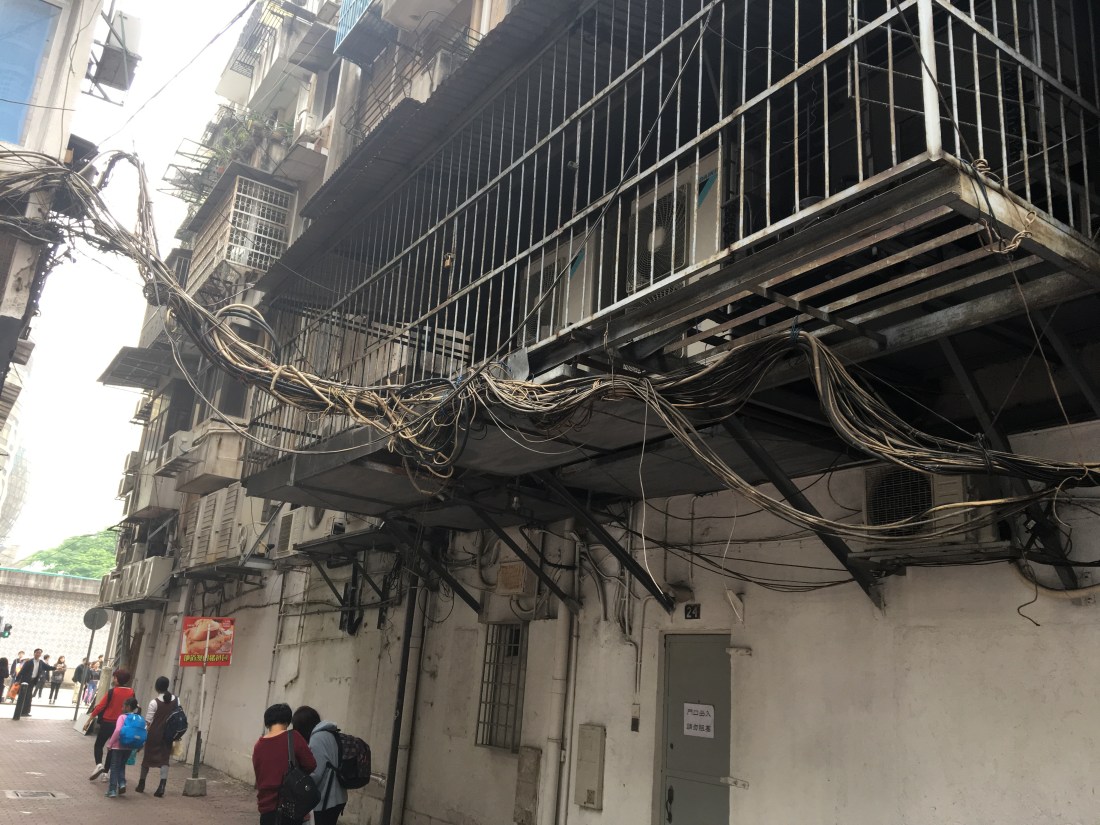


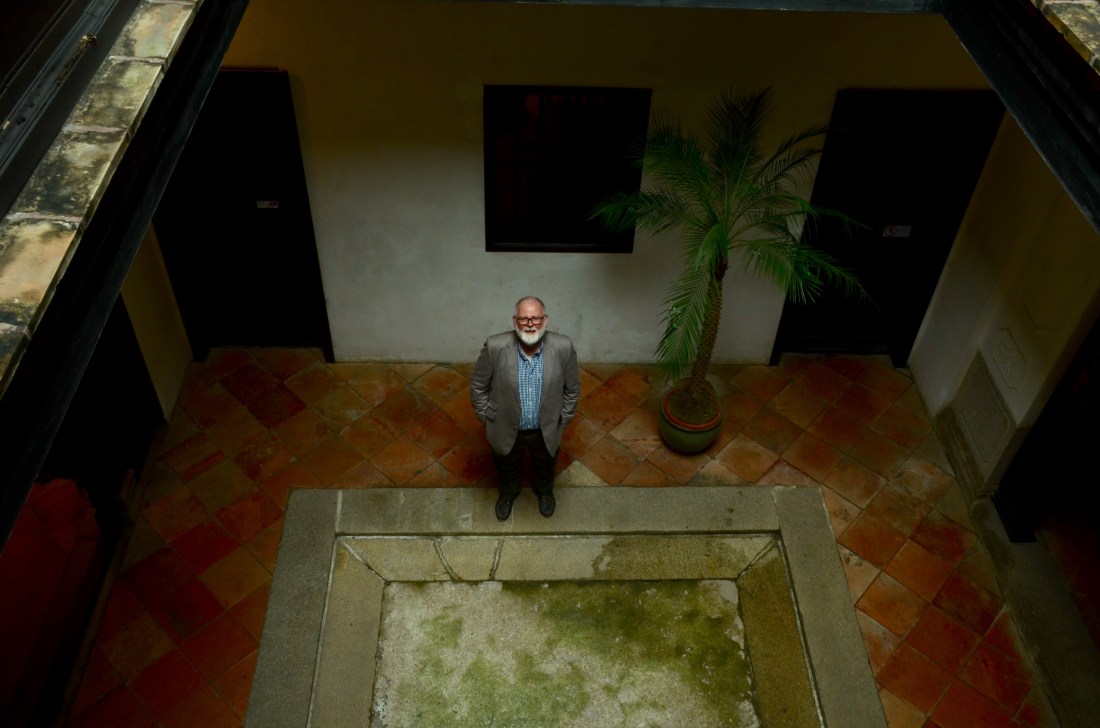 There were many decorative features both internally and externally. Friezes were obviously a major theme of architecture during the building’s heyday, and we liked the way the clay drainage pipes were cast to look like bamboo.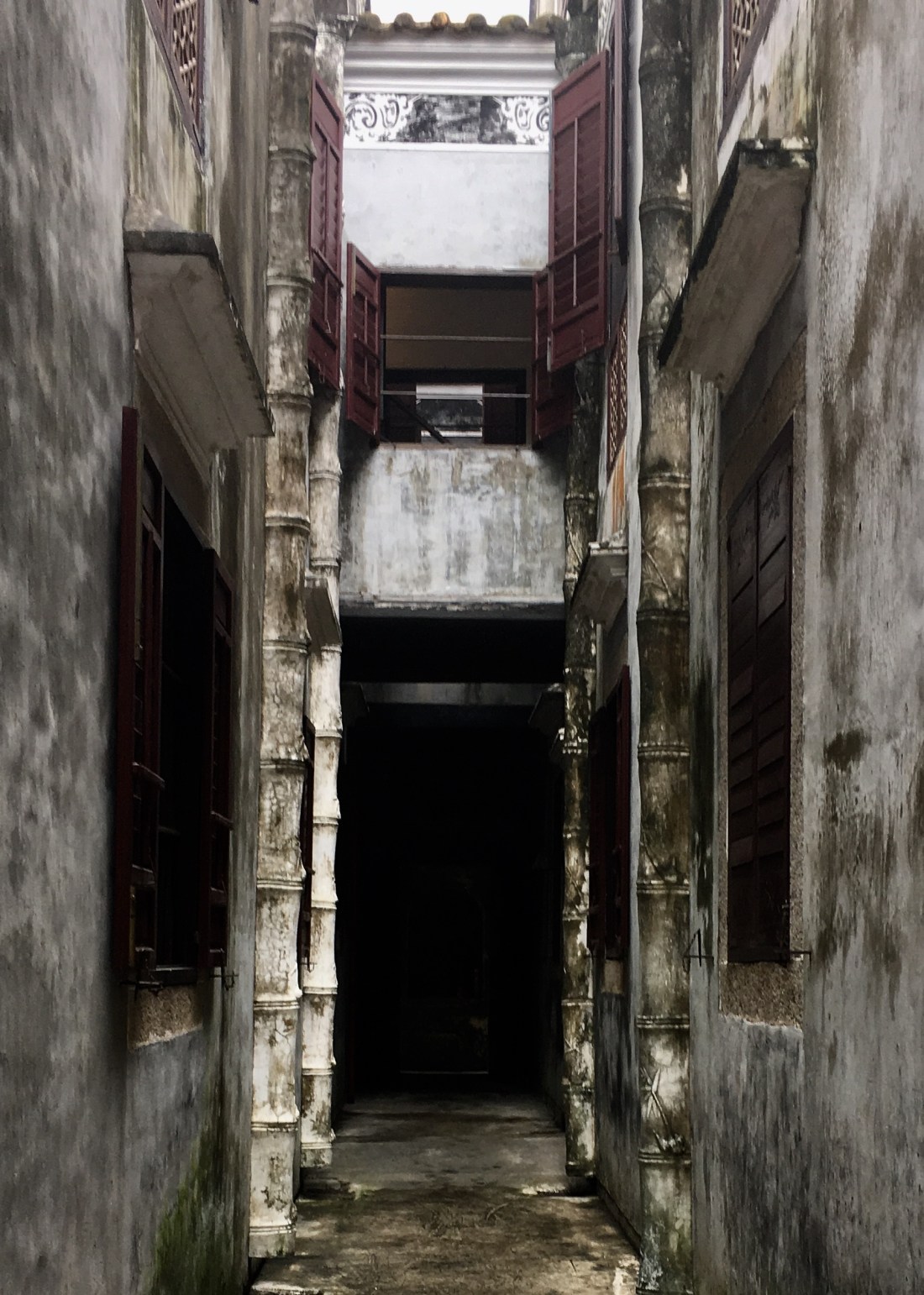


 We spent quite a while wandering around the maze of rooms within the compound, and would definitely recommend a visit here if you find yourself in this part of the world.
 And it just got thicker the higher you walked and, presumably, the bigger the requests in the prayers became. The lampshade-like objects are all incense sticks.


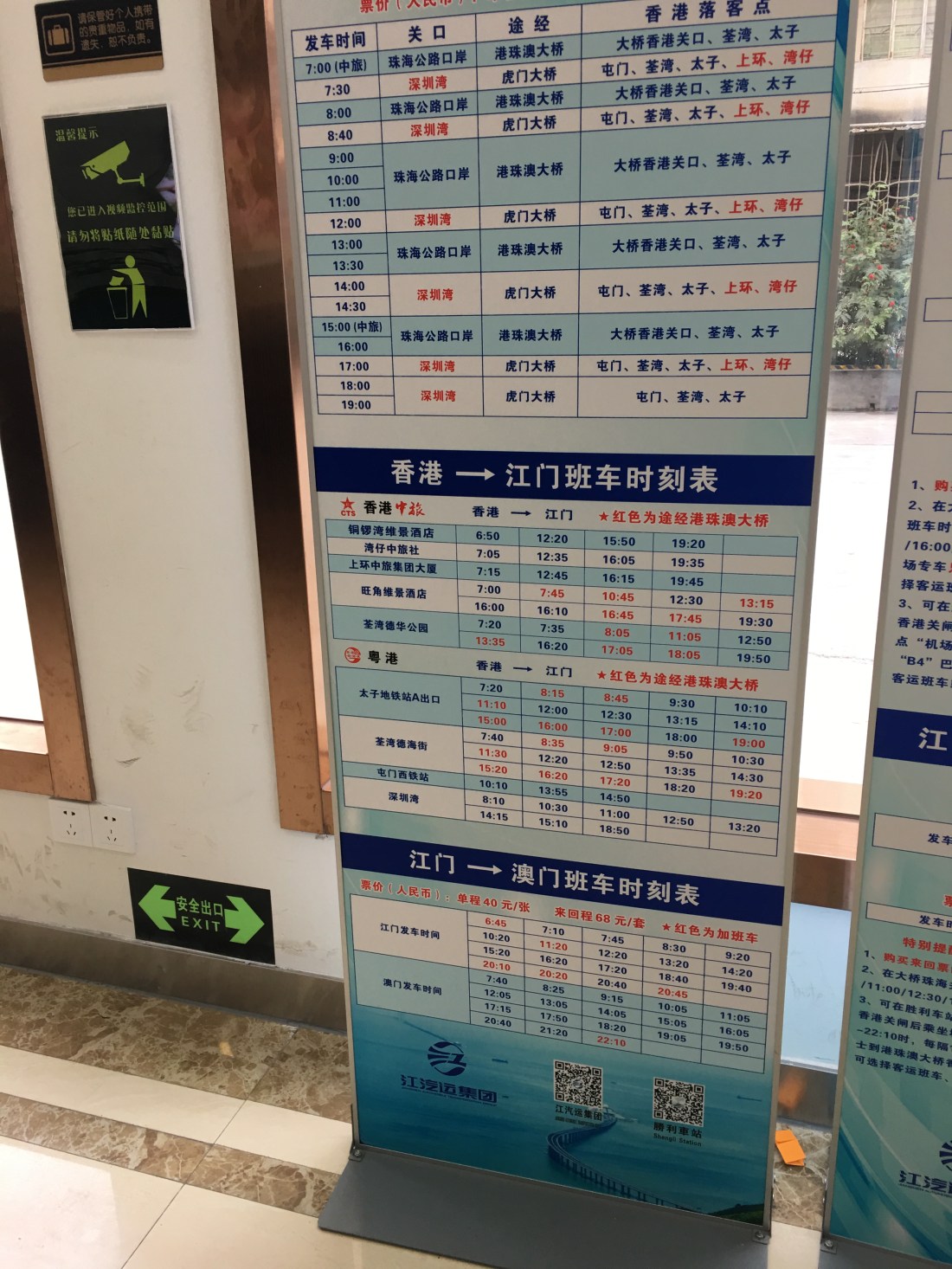 Armed with our photos, we asked the hotel concierge to help us decipher what we were being told. The bottom section – starting at 6:45 – was the list of times of buses to Macau, costing CNY 40 one-way and CNY 68 return. All our worries were over.


 World After Work