Today, we travelled from Tokyo to Kyoto. These cities are anagrams of each other, but it transpires that there’s a reason for this. Kyoto, the old capital of Japan, means Capital City. Tokyo was called Edo until the capital was moved there, at which point it was re-named “The capital in the East” or, in Japanese, Tokyo. Finding that out solved a little mystery for me so I thought I’d share it.
We chose today to start using our JR Rail Pass which will give us 7 days of travel on Japanese Rail lines. We bought the pass before leaving the UK and received a voucher which we had to exchange at a major station in Japan. For us, this meant Tokyo Station. We opted for the “Green Car” Pass which is the equivalent of First Class on UK trains. I paid the premium because I had read so many scare stories about the lack of luggage space in ordinary carriages of Japanese trains. To be fair, there’s not much luggage space in the green car either, but it was pretty quiet so we were able to get most things up in the overhead luggage rack and tucked the suitcases into the two seats behind us, which were empty all the way to Kyoto.


We travelled the 450km by bullet train, or Shinkansen. The pass doesn’t allow travel on the superfast non-stop express, but the Hikari service, which stops at a few stations en route, still covers the distance in a highly respectable 2hrs 40mins. Having spent the best part of 20 years commuting on the Brighton line into London, it was a delight to experience a railway being run properly.
We arrived in Kyoto on time and grabbed a taxi to the place where we were staying. I had booked a Ryokan, which is a traditional Japanese style of inn. You may be unaware (I certainly was) that Japan pretty much invented the concept of the hotel and the oldest Ryokans date back to the start of the 8th century. In the Ryokan, the floors of the rooms are covered in tatami mats. We remove our shoes at the door and step through a sliding door into our living space.
 Another aspect of the inn is the availability of communal baths where guests can go and cleanse themselves. Ishbel and I both took advantage of this facility after arriving and it turned out that we were each the only people in our respective, gender segregated baths. Afterwards, we dressed in our Yukata – an indoor kimono type of robe. Once we were dressed in these, I changed back to western clothes. I realised that we would be required to sit cross legged on the floor to eat dinner, and the yukata barely covered my modesty when seated in a sedate western fashion. It would certainly result in overexposure if I were to wear it while dining.
I had taken the dinner, bed and breakfast option. As a highly unadventurous diner, this was quite a major step for me. Dinner was served in the room and I grew increasingly nervous as the meal arrived.
 You may be able to spot here a considerable quantity of raw fish on the plate in front of Ishbel. Also, that thing in the sauce on the plate at the left of the picture is a fish head. Well, I ordered it so I had to live with the consequences. It turns out the fish head had quite a bit of fish meat on it and the sauce was quite delicious. Most of the raw fish was reasonably pleasant and the tempura was good. Surprisingly, I was able to eat enough so that I didn’t feel the need to sneak out for a burger later in the evening. Ishbel had no qualms about any of it of course.
After dinner, we rang for the trays to be removed. When the table was cleared, our bed was laid out.


We both enjoyed a comfortable night on the triple layered futons. I’m starting to get the hang of this Japanese thing. Slightly. Let’s wait and see how breakfast goes.


 It was an easy walk back to our flat from here and, as we strolled and chatted, it suddenly struck us why Tokyo taxis look so odd.
 It’s a long time since UK cars were built with wing mirrors on the actual wings of the car. We didn’t figure this out for ages but once you notice, it really does look odd.
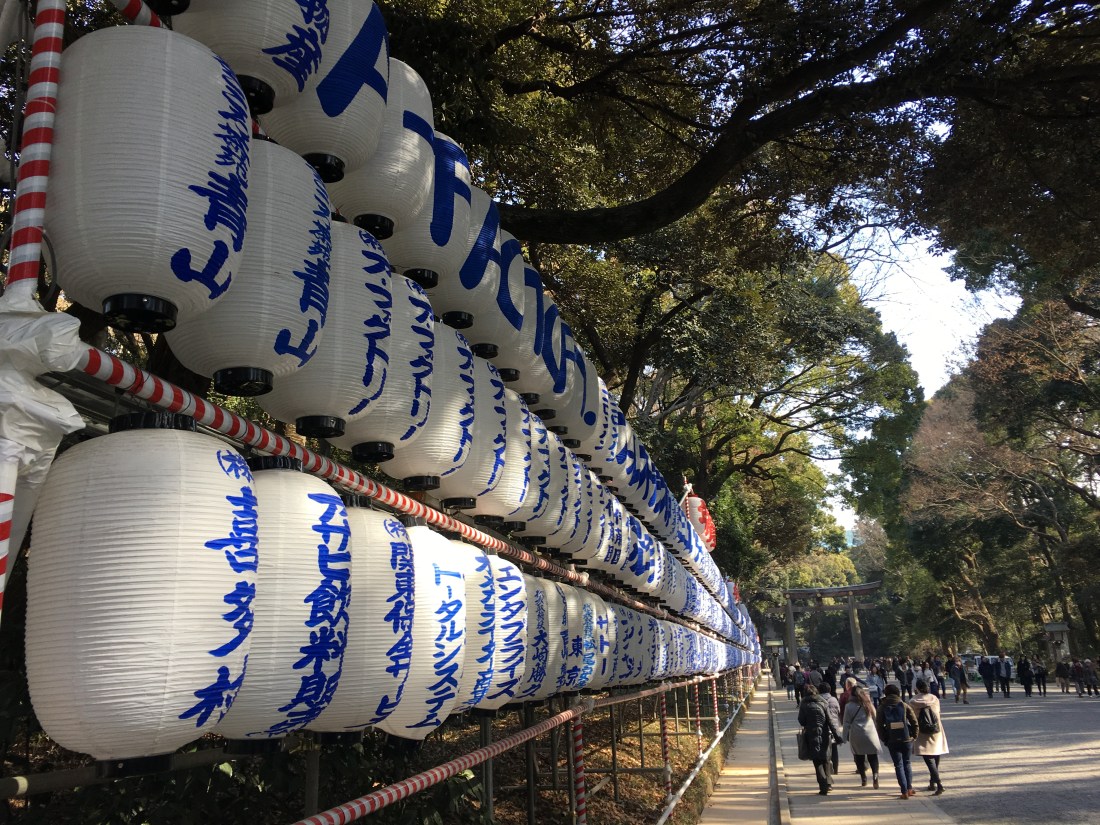
 That’s why there were several barrels of burgundy donated as part of the consecration ritual for the shrine.
 After getting back down to ground level, we took a little stroll around the area. There’s an interesting phenomenon here around how restaurants attract passing trade. Some of them have menus with pictures on them which allow non-Japanese speakers like ourselves to simply point and smile to get what we want. Others go one better.
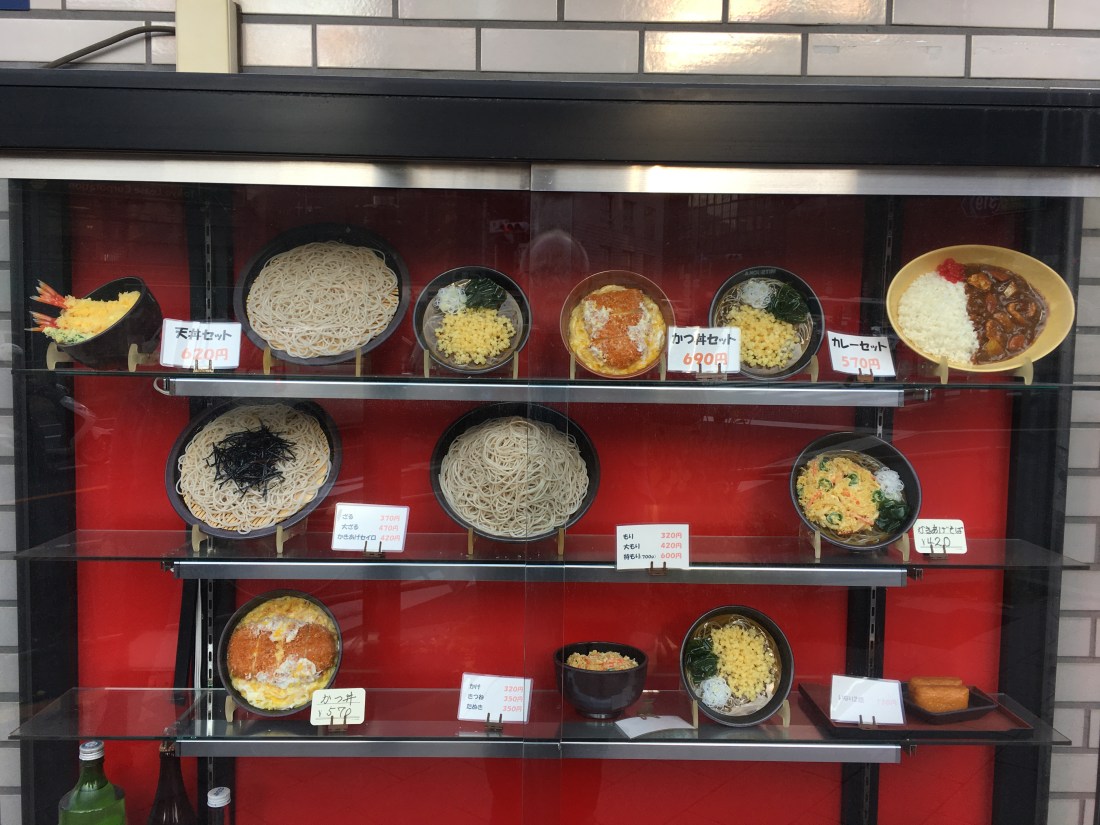 They display what I sincerely hope are artificial reproductions of the food available inside. This isn’t something I’ve ever encountered before and I really like it.
 Landing in Tokyo, we were quickly through immigration and the bags were waiting for us when we got to baggage reclaim. Then we were straight out through customs and facing, once again, a land where we don’t speak a word of the language or read a letter of the alphabet. Not quite true. We now recognise one character, which is the same in both Chinese and Japanese:
 We then had the interesting task of figuring out how to flush the toilet. I had been warned about this in advance by a colleague who had recently visited Japan but any pearls of wisdom he provided had since deserted me.
 Across the water, there’s the old settlement of Taipa and the area where there appears to be a concerted attempt to reconstruct the Las Vegas Strip: Cotai. We think of ourselves now as experienced Vegas visitors so we decided to head over there and see what all the fuss was about. There are a number of free shuttle buses that run between casinos in the same family group, so we walked over to Wynn (which is built to look exactly the same as its Vegas namesake) and hopped on the bus to Wynn Palace in Cotai.
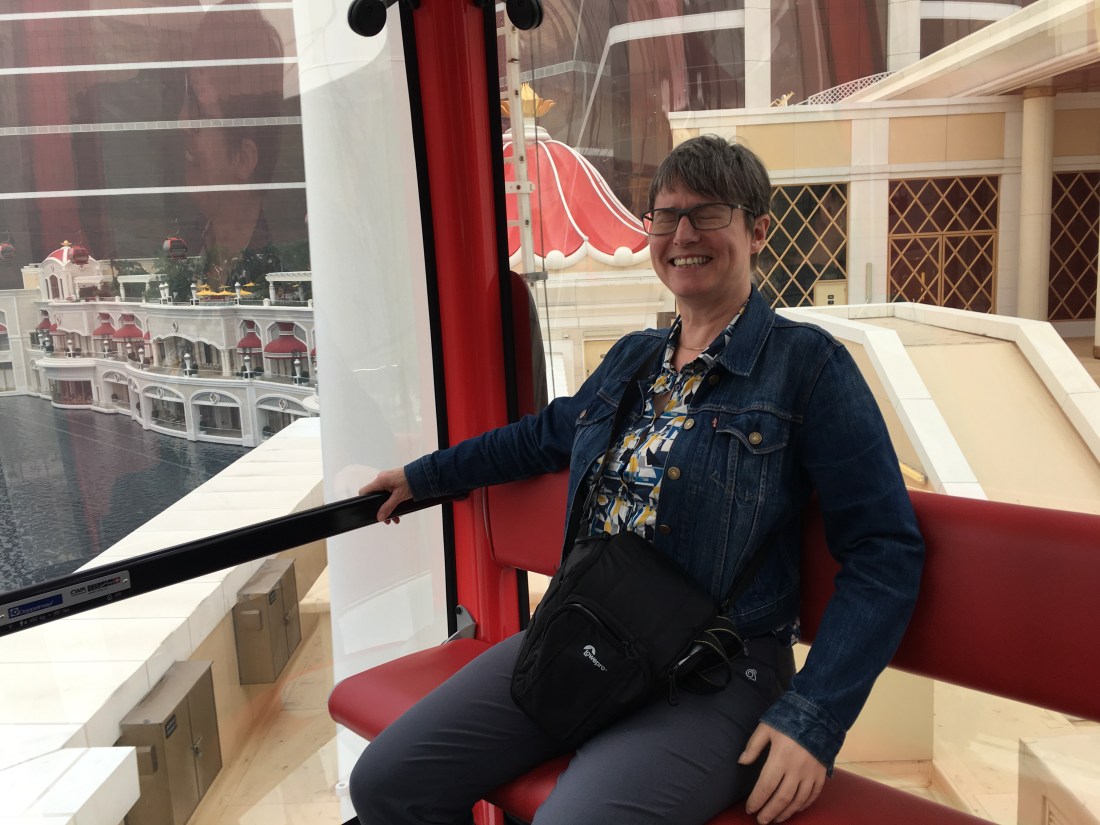
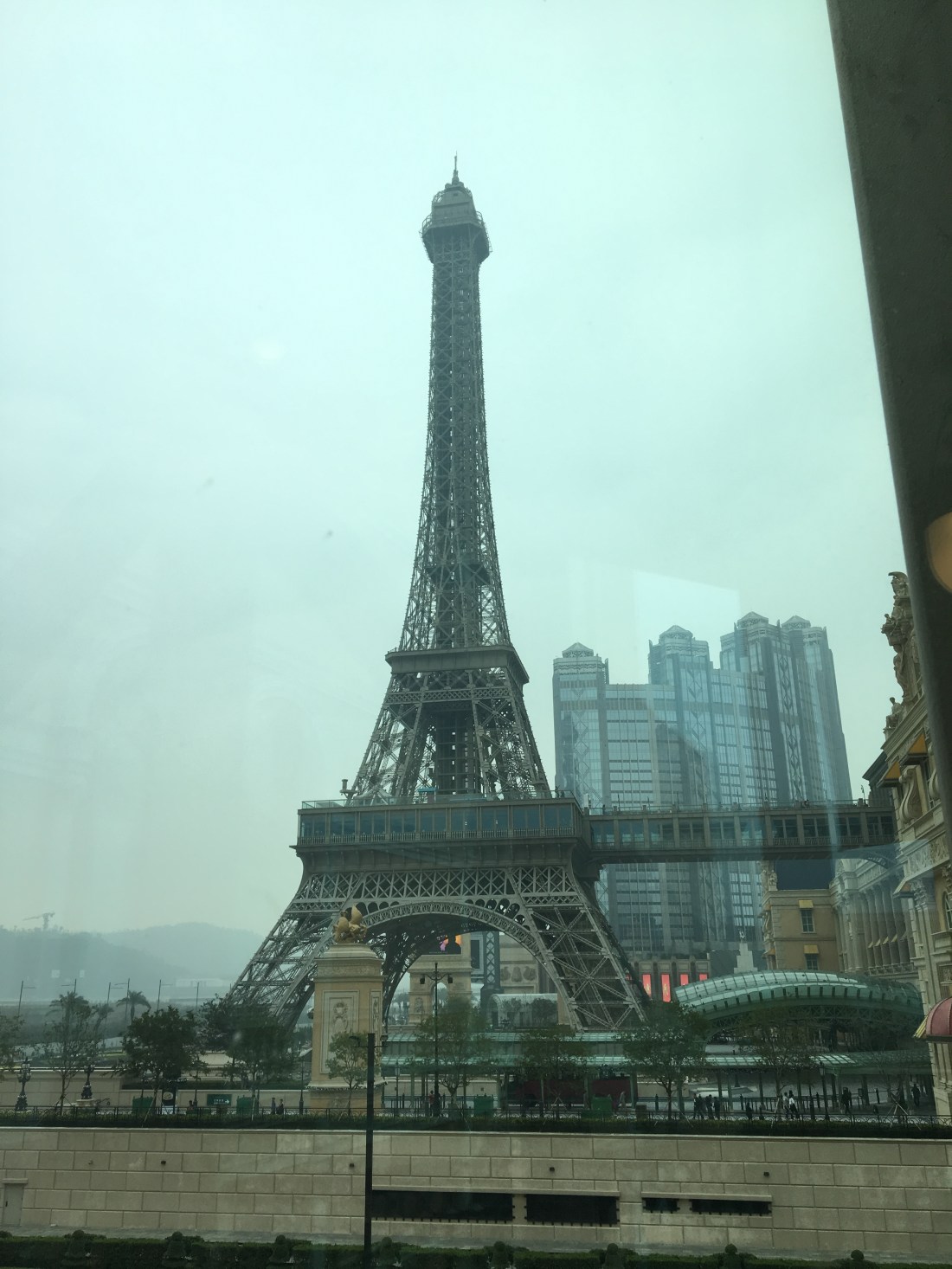 As we walked from the Venetian to the Parisian, Ishbel and I engaged in a lively debate about whether the Macau Eiffel Tower was bigger than the Vegas Eiffel Tower. It turns out they’re both roughly half the size of some kind of homage tower in Paris.
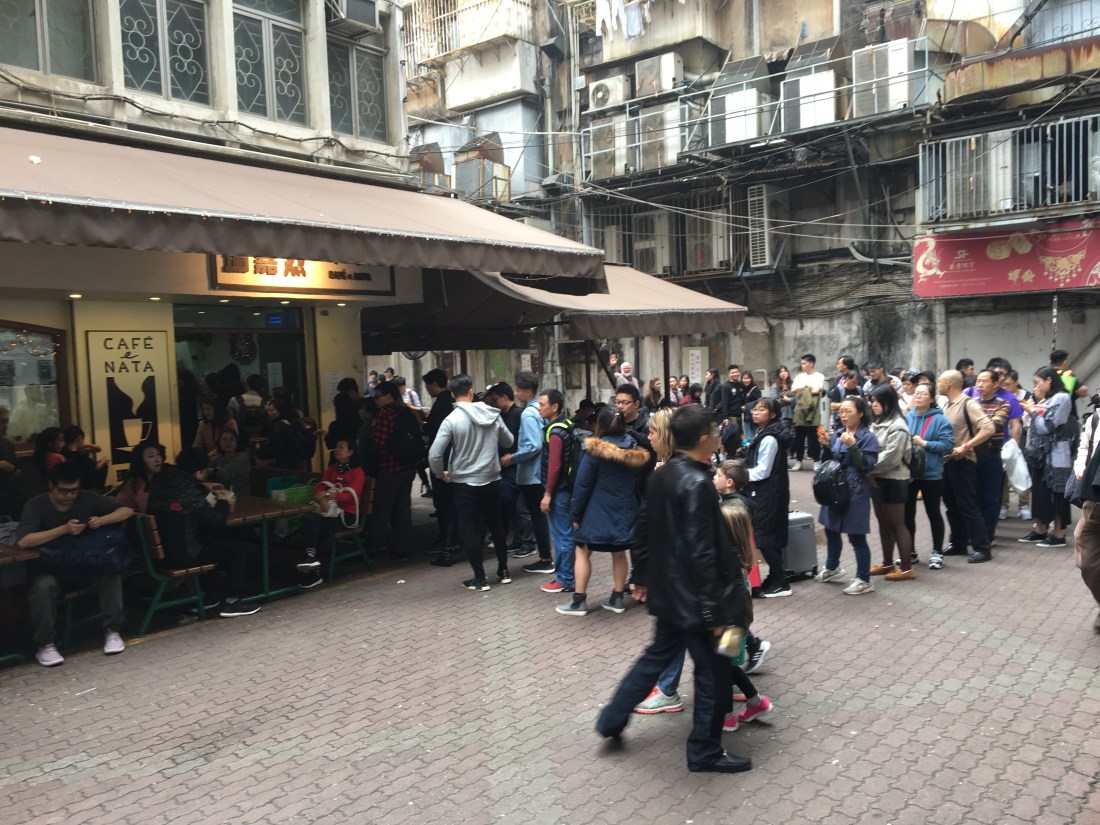 Close inspection of this photo will reveal two things: one is my (relatively) towering presence at the back of the ridiculously long line; the other is the astoundingly cavalier attitude of Macau residents to electrical wiring, and cable management generally. So much so that it merited a close-up.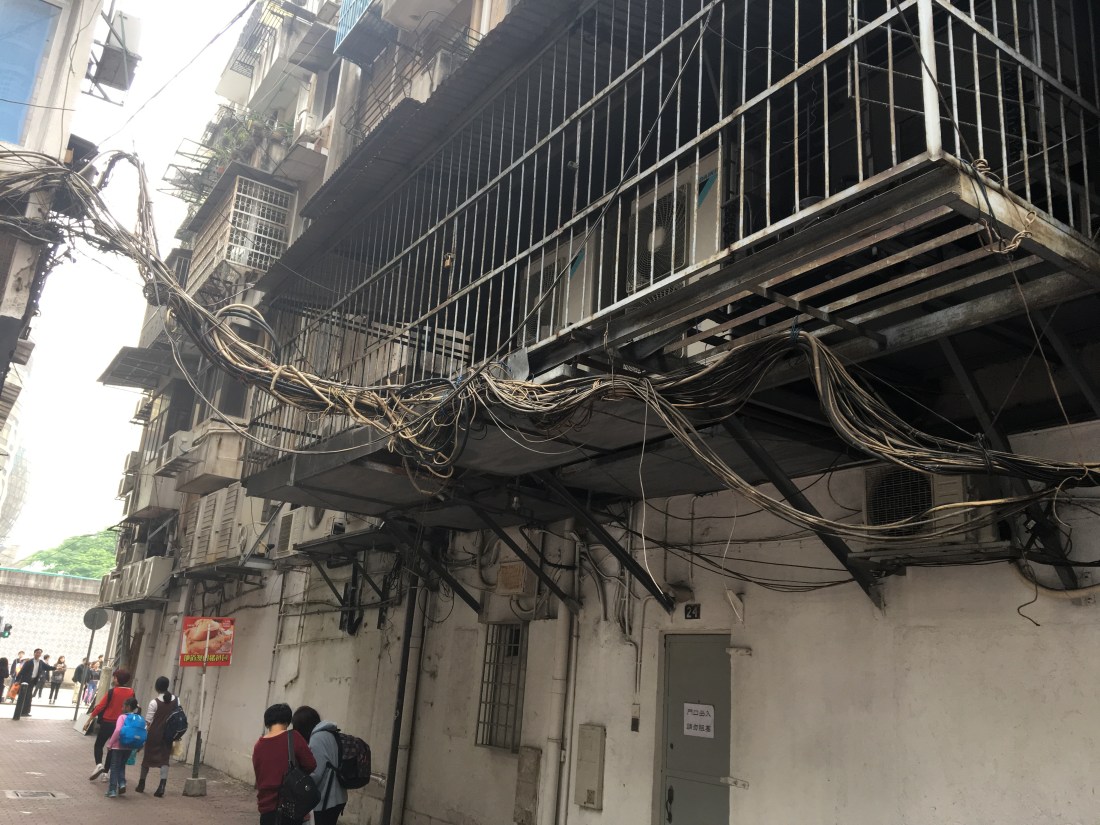


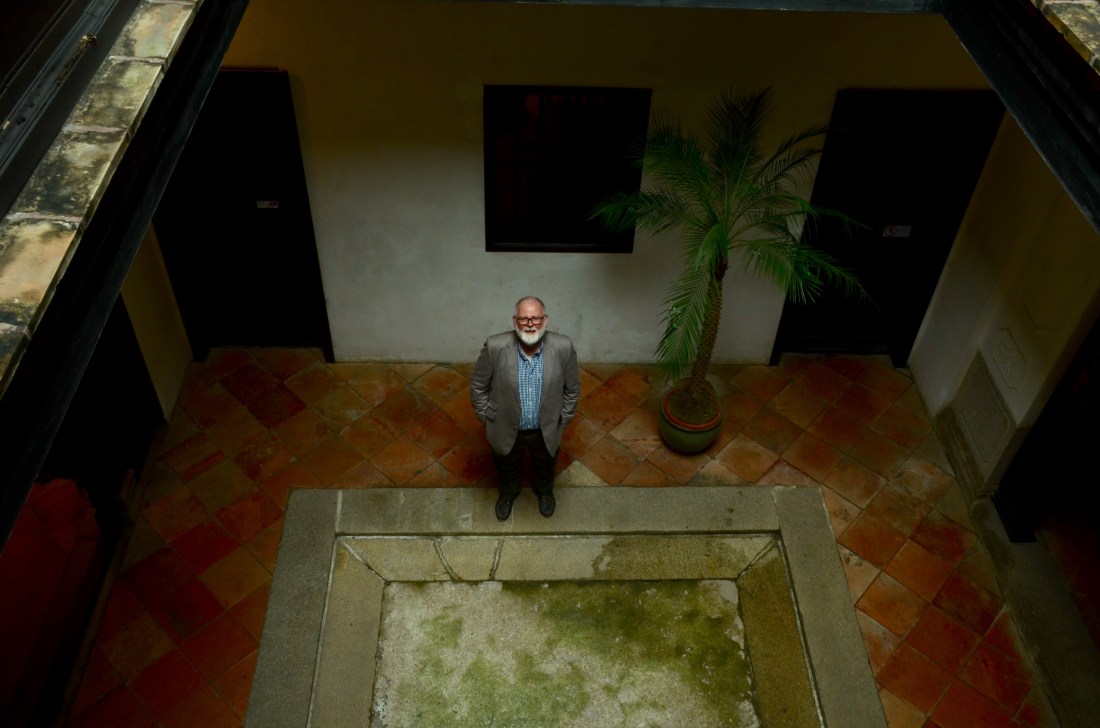 There were many decorative features both internally and externally. Friezes were obviously a major theme of architecture during the building’s heyday, and we liked the way the clay drainage pipes were cast to look like bamboo.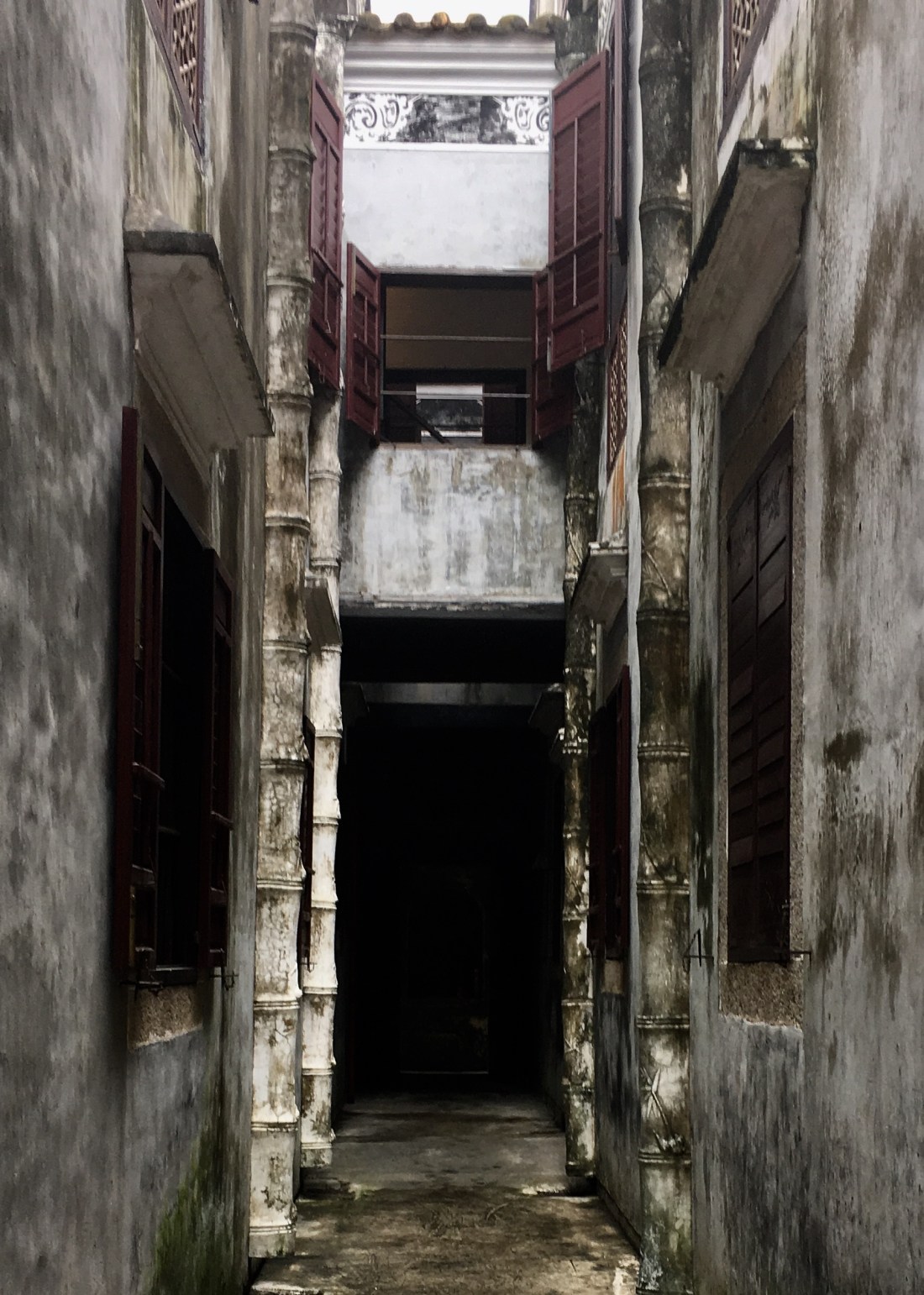


 We spent quite a while wandering around the maze of rooms within the compound, and would definitely recommend a visit here if you find yourself in this part of the world.
 And it just got thicker the higher you walked and, presumably, the bigger the requests in the prayers became. The lampshade-like objects are all incense sticks.


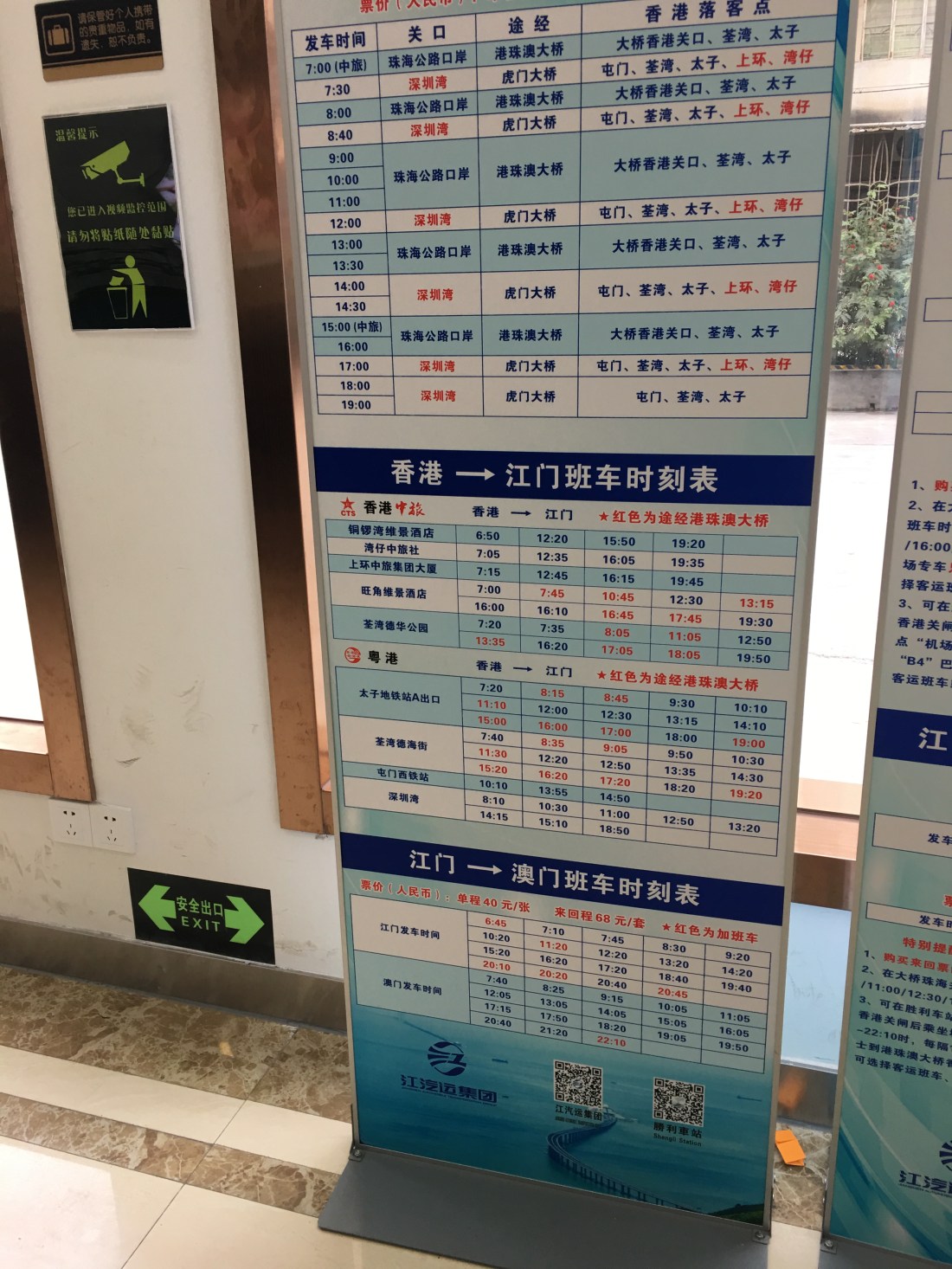 Armed with our photos, we asked the hotel concierge to help us decipher what we were being told. The bottom section – starting at 6:45 – was the list of times of buses to Macau, costing CNY 40 one-way and CNY 68 return. All our worries were over.



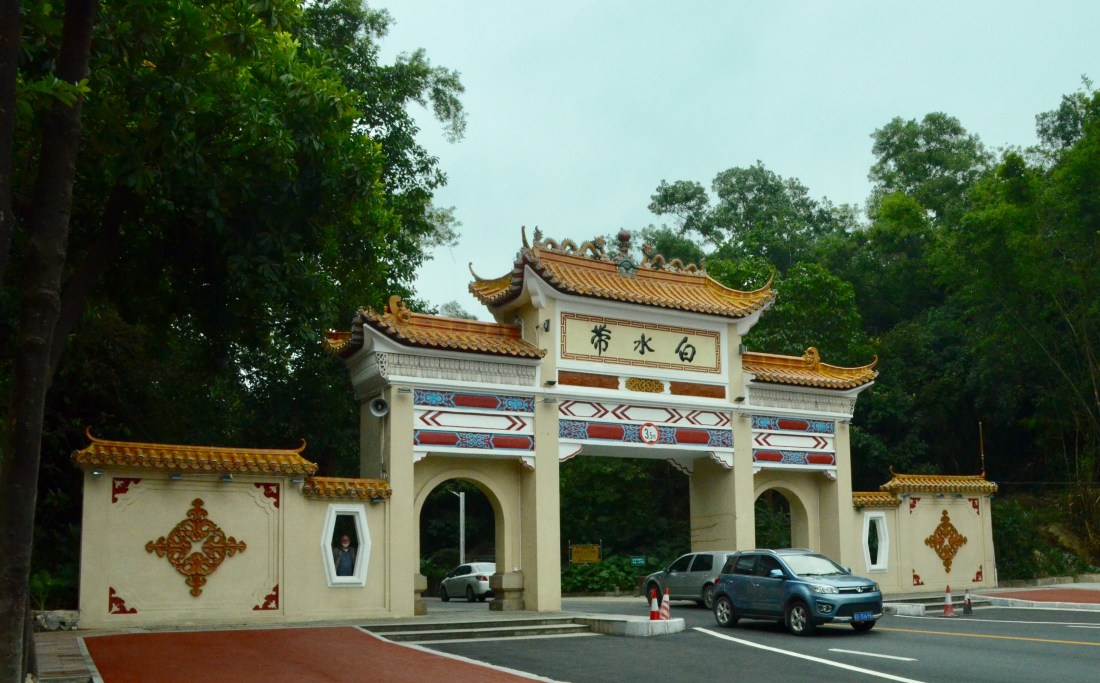
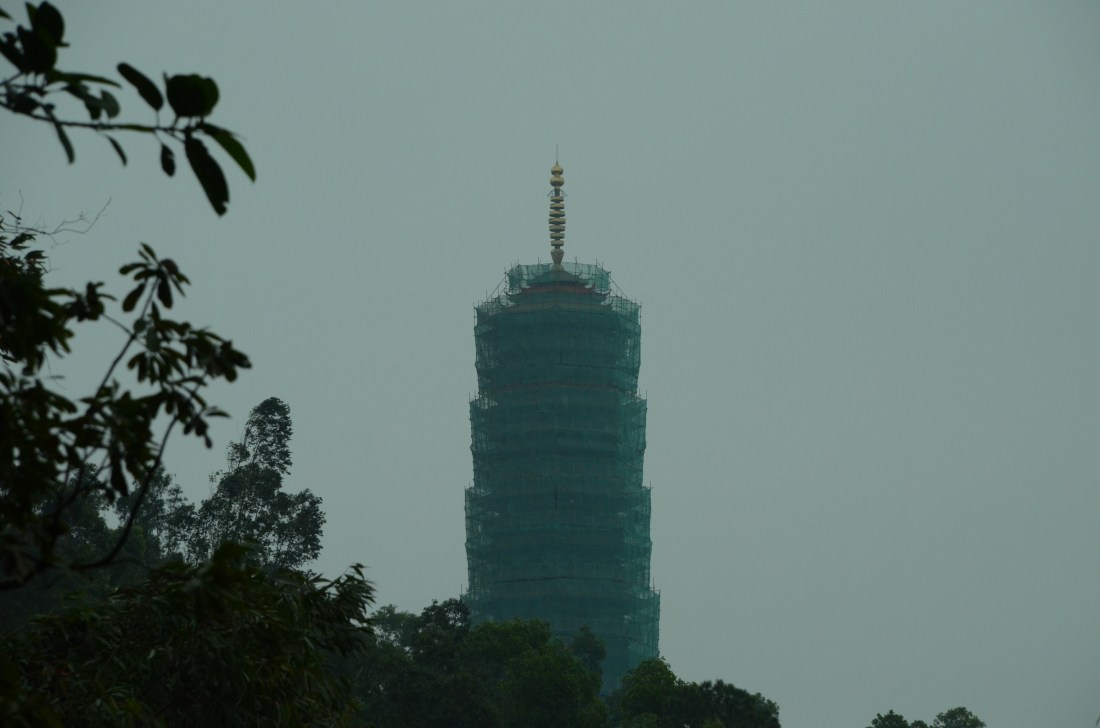 It’s been a theme of our stay in Jiangmen that there is a huge amount of public work underway and the pagoda had obviously been included in the work orders. We’ve been trying to figure out if there’s some kind of state visit or major international sporting event scheduled to take place but haven’t found anything. Anyway, this view of the pagoda was enough to convince us not to travel all the way to the top of the hill. We did carry on to a temple on the hillside which, as luck would have it, had a tiny model of the pagoda outside.
 So that’s what we missed out on.
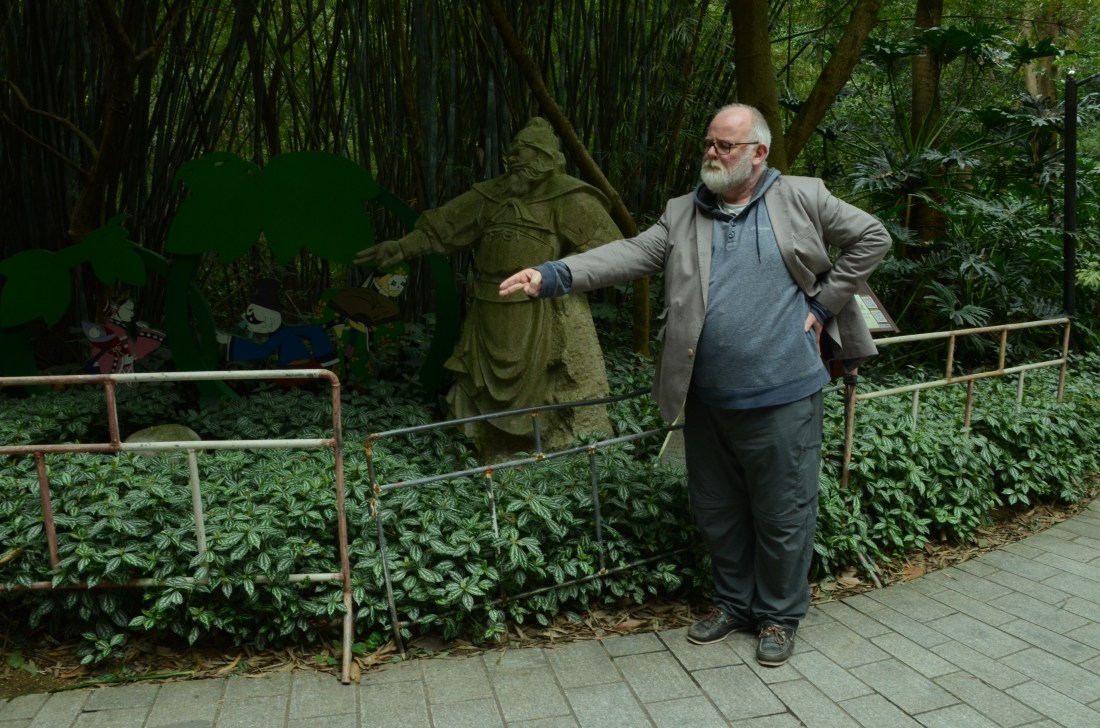 We’re really getting the hang of making our own entertainment here.
 There’s nothing quite like catching sight of a kingfisher. The photo is the best we could get with a small lens. We had decided not to wander around China with the huge telephoto lens and binoculars. I’m sure you’ll understand why.

 It turned out to be a cross between an end of year student art show and an Ideal Home Exhibition. We were again treated like novelties and as we were admiring some jade carvings at one of the stands, a young lady came over to us to explain how they were made. Nothing unusual in that, of course, except two other people also arrived to film the entire exchange. At another point, I turned around to see someone with a camera in my face. I checked behind me to see what he was photographing, but it was me. I think it may be a combination of my size and my facial hair. Maybe they really think I’m Santa.
 We eventually reached the restaurant we were headed for, called Red Garlic and enjoyed an early dinner. The staff in that restaurant speak excellent English so if you’re in Jiangmen and want a break from all the miming, or pointing at pictures of food, this is the place for you.
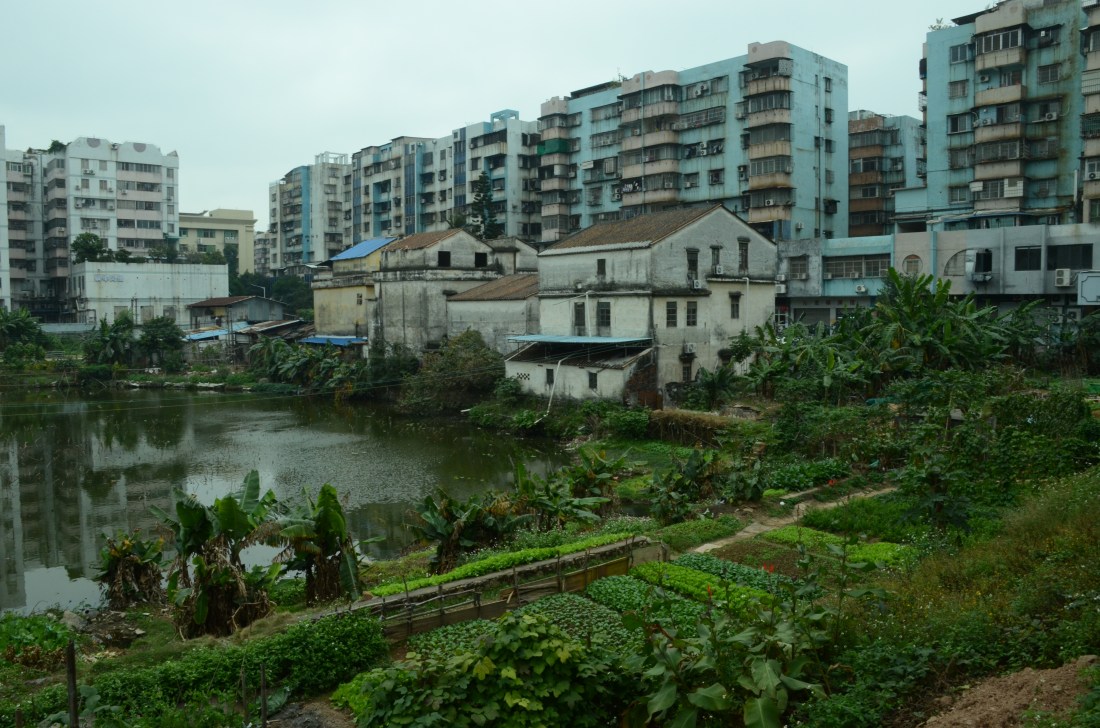
 They’re not maintained as valuable architectural monuments and are still being lived and/or worked in but it’s an interesting contrast with all the new construction in the area around the hotel. The area around Changdi as we walked up Chang’an Road away from the water is altogether more vibrant and lived in than most of the spots we’ve visited so far. The population of Jiangmen is 4.5 million – almost the same number of people as the whole of Scotland – so we had expected to hit a crowded commercial centre at some point and this was it.
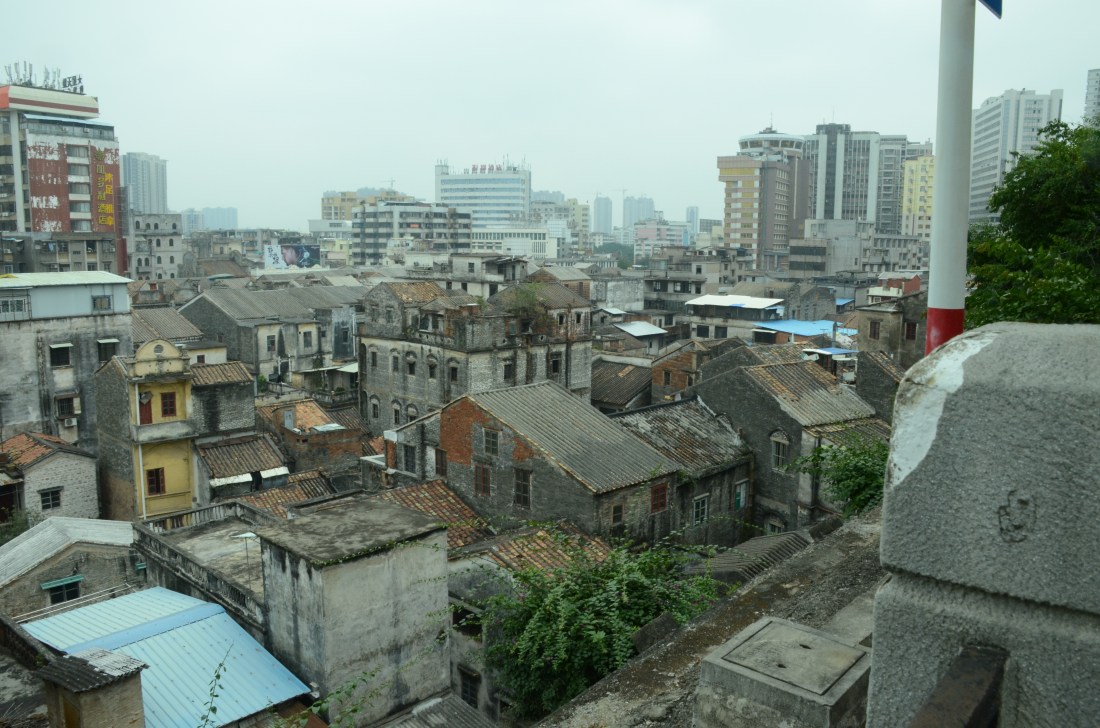 At the top, we encountered a memorial to
 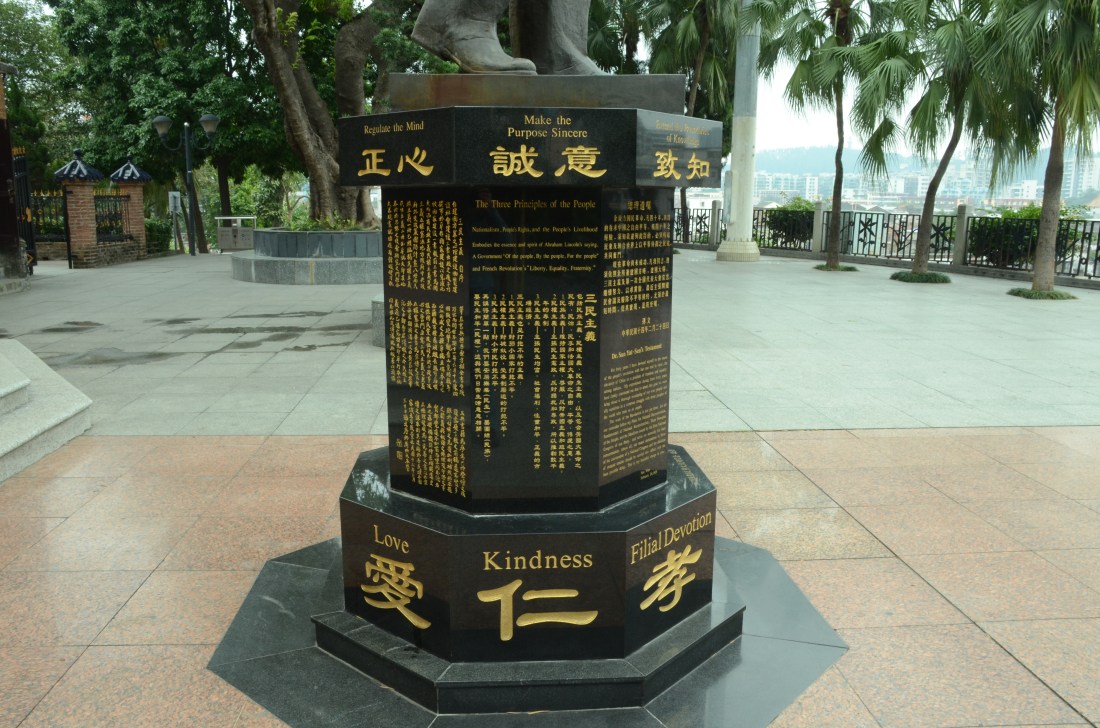 ‘Nationalism, People’s Rights and the People’s Livelihood embodies the essence and spirit of Abraham Lincoln’s saying, a government “of the people, by the people, for the people” and French Revolution’s “Liberty, Equality, Fraternity”. ‘ He had a fascinating life and it would be impossible for me to do justice to his achievements. If you get some time, look him up.
 One thing I’ve noticed about commercial areas here is that competitors in the same field tend to cluster together, much as they used to in London (think Savile Row for tailors or Harley Street for doctors). This makes for an assault on the senses when you encounter the street of mobile phone vendors.
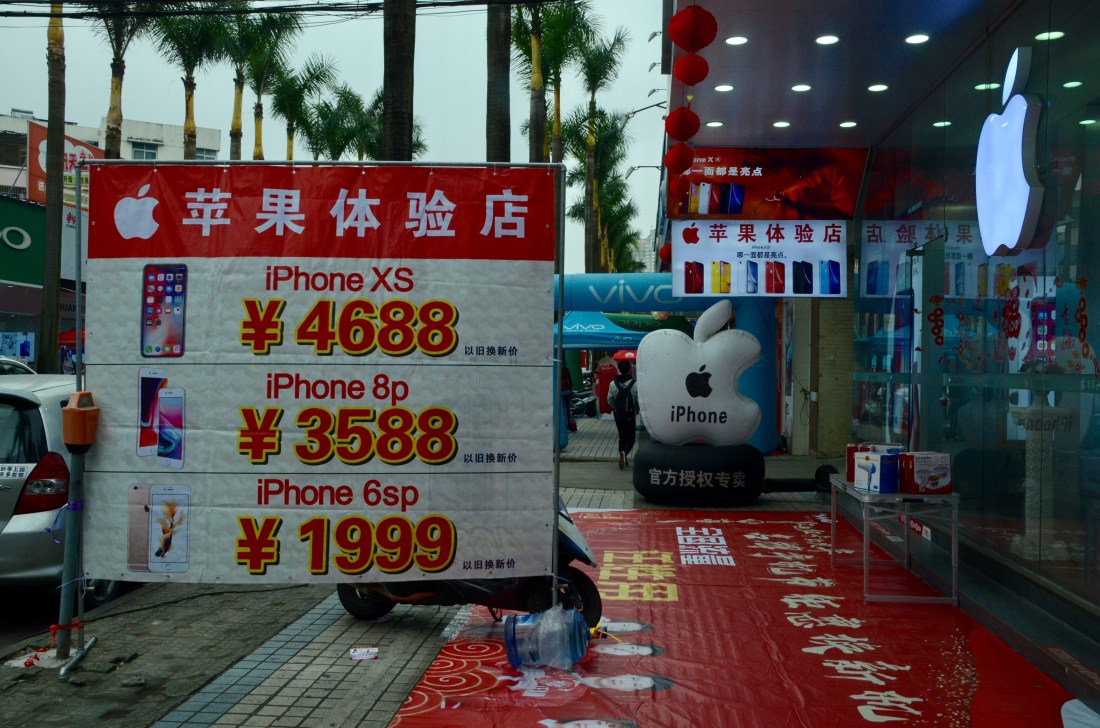 Apart from Apple and, of course, Huawei there are another two equally ubiquitous brands: Vivo and Oppo. This street had a minimum of ten specialist shops for each brand. I assume they find some way of making it work commercially, but it seems unnecessarily over-competitive.
 World After Work