An easy start to the day today as we re-packed the small amount of gear we had taken out of the suitcases and took a leisurely stroll from the hotel on to the departures level at the airport. Check in was painless as we checked the bags and walked the guitar case over to the outsize baggage counter.

They were kind enough to put on a “Fragile” label, but the green spangly case is starting to pick up a bit of character from the journey.
I’m sorry to keep comparing BA unfavourably to Cathay Pacific but, once again, the service was perfect. We even received a text while sitting in the lounge informing us that the flight would be delayed by 15 minutes. BA doesn’t even regard 15 minutes as a delay.
Anyway, we were loaded and away not too long after the scheduled departure time for the quick 4 hour hop to Tokyo. That gave me enough time to watch Deadpool 2 on the huge screen that is so much better than BA. Sorry, but it is.
 Landing in Tokyo, we were quickly through immigration and the bags were waiting for us when we got to baggage reclaim. Then we were straight out through customs and facing, once again, a land where we don’t speak a word of the language or read a letter of the alphabet. Not quite true. We now recognise one character, which is the same in both Chinese and Japanese: 人 means people. OK, not all that helpful, but it’s a start.
We knew that our target was Akasaka station, on the Chiyoda line of the Tokyo underground system. The nice lady at the airport ticket office sold us a ticket for the Skyliner express train, which would take us to Ueno where we would change to a train to Nishi-nippori, where we would change on to the Chiyoda line to Akasaka. Easy peasy, Japanese-y.
And then a strange thing happened. As we struggled on to the Skyliner and tried to stow all our bags in the limited available space, we were helped by a young man with a Scottish accent. It turns out he’s been living in Japan for the last two years working in robotics. Also, he’s a Glasgow University graduate, and studied Computing Science, just like I tried to do back in 1977. We had a lovely chat with him on the ride in and he gave us his business card so we could contact him if we needed help while we were in town, which was really nice of him.
We completed the rest of the journey safely, although I was constantly confused by escalator etiquette here (stand on the left, walk on the right) which is the opposite of the London Underground. I think we just managed to avoid the start of the real rush hour as we emerged from Akasaka station and took possession of our AirBnB. It’s a charming little place that the landlord has set up to look like a post-industrial loft. All bare wood, exposed brick and concrete.
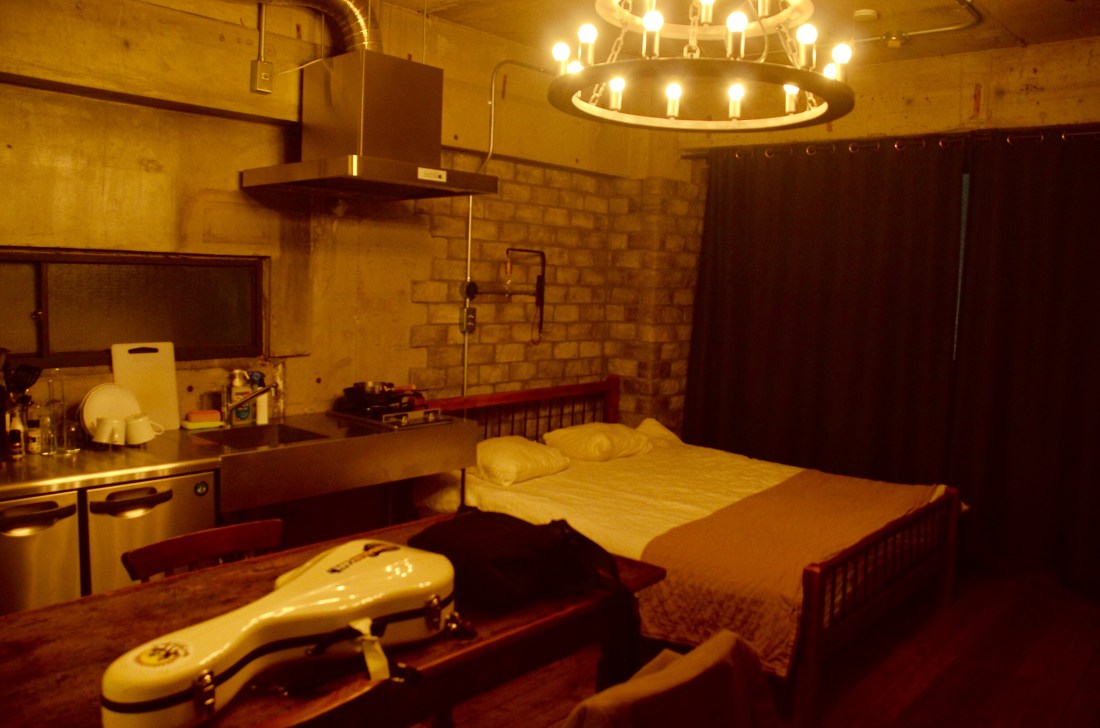
 We then had the interesting task of figuring out how to flush the toilet. I had been warned about this in advance by a colleague who had recently visited Japan but any pearls of wisdom he provided had since deserted me.

A combination of Google and trial and error got us there in the end.
Having settled in to the apartment, we decided to stretch our legs and get in a couple of necessities. Tea bags and milk, primarily. It turns out that we find ourselves in quite a lively part of Tokyo. Bearing in mind that this was about 8pm on a Monday evening, there was a remarkable number of significantly pissed-up salarymen roving the streets in large groups. Dark suits and dark overcoats are still the standard uniform – it doesn’t look like the permanent dress-down or business casual approach has yet been embraced over here.
The other surprising phenomenon was the cycling culture. We have always assumed, perhaps in an ill-informed and stereotypical kind of way, that the Japanese respected order and rules are expected to be obeyed. There is a significant number of cyclists who don’t play that way. A lot of them are cycling on pavements at speeds that don’t seem safe for them or us.
Anyway, we found a little supermarket where we acquired the requisites for a cup of tea, and also food for breakfast the next day. That will be the first meal we’ve prepared for ourselves since the 16th of December in Johannesburg. It’s a tough life.
 Across the water, there’s the old settlement of Taipa and the area where there appears to be a concerted attempt to reconstruct the Las Vegas Strip: Cotai. We think of ourselves now as experienced Vegas visitors so we decided to head over there and see what all the fuss was about. There are a number of free shuttle buses that run between casinos in the same family group, so we walked over to Wynn (which is built to look exactly the same as its Vegas namesake) and hopped on the bus to Wynn Palace in Cotai.
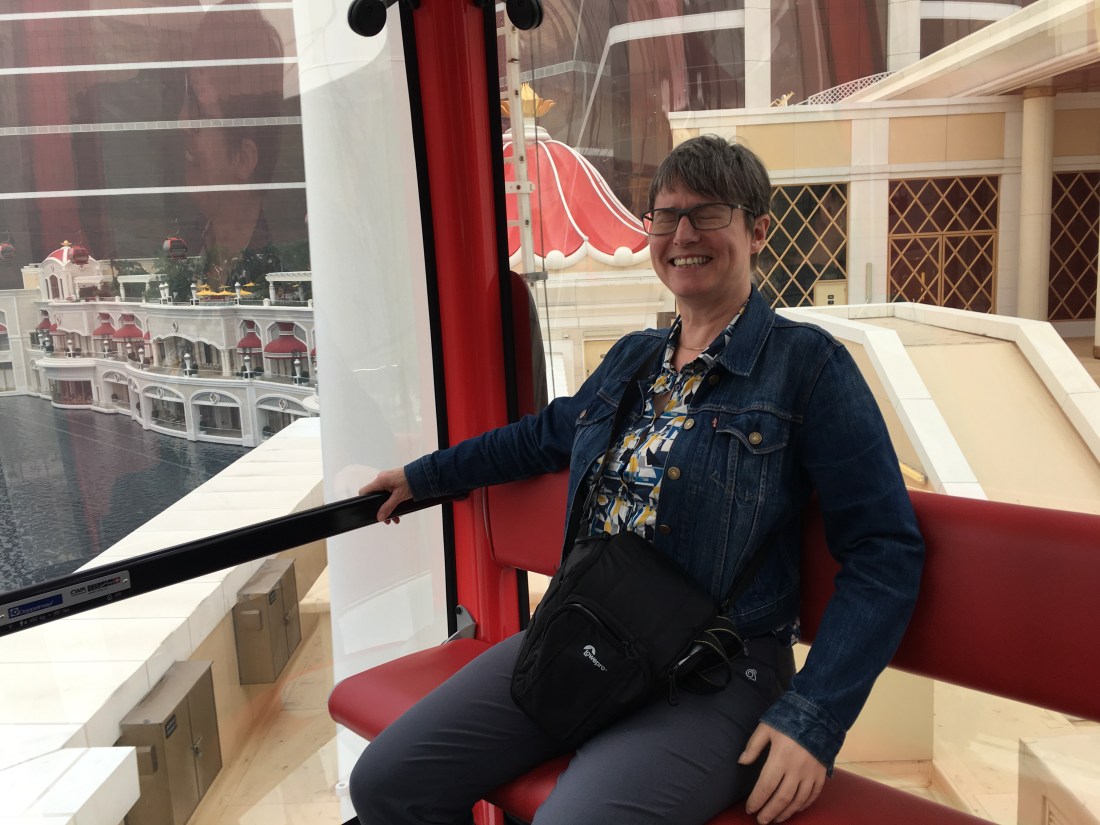
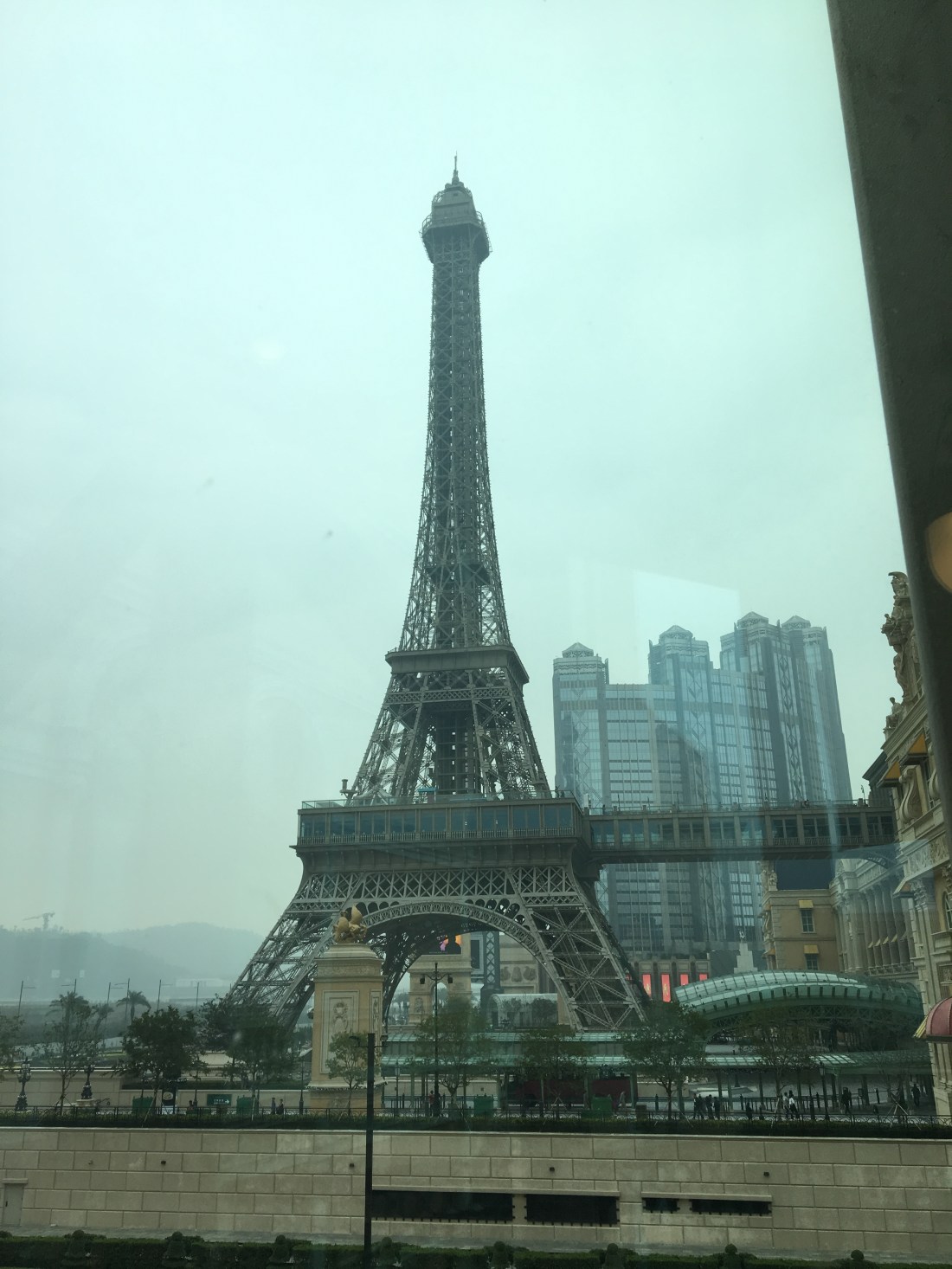 As we walked from the Venetian to the Parisian, Ishbel and I engaged in a lively debate about whether the Macau Eiffel Tower was bigger than the Vegas Eiffel Tower. It turns out they’re both roughly half the size of some kind of homage tower in Paris.
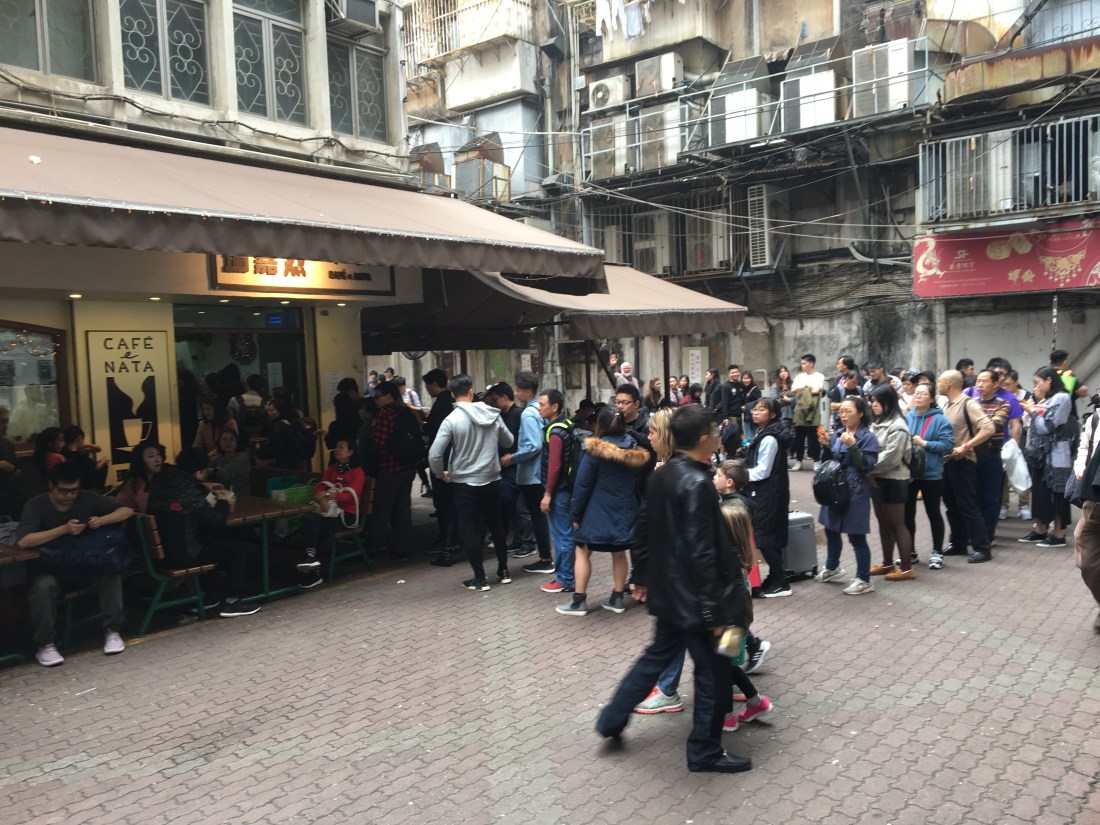 Close inspection of this photo will reveal two things: one is my (relatively) towering presence at the back of the ridiculously long line; the other is the astoundingly cavalier attitude of Macau residents to electrical wiring, and cable management generally. So much so that it merited a close-up.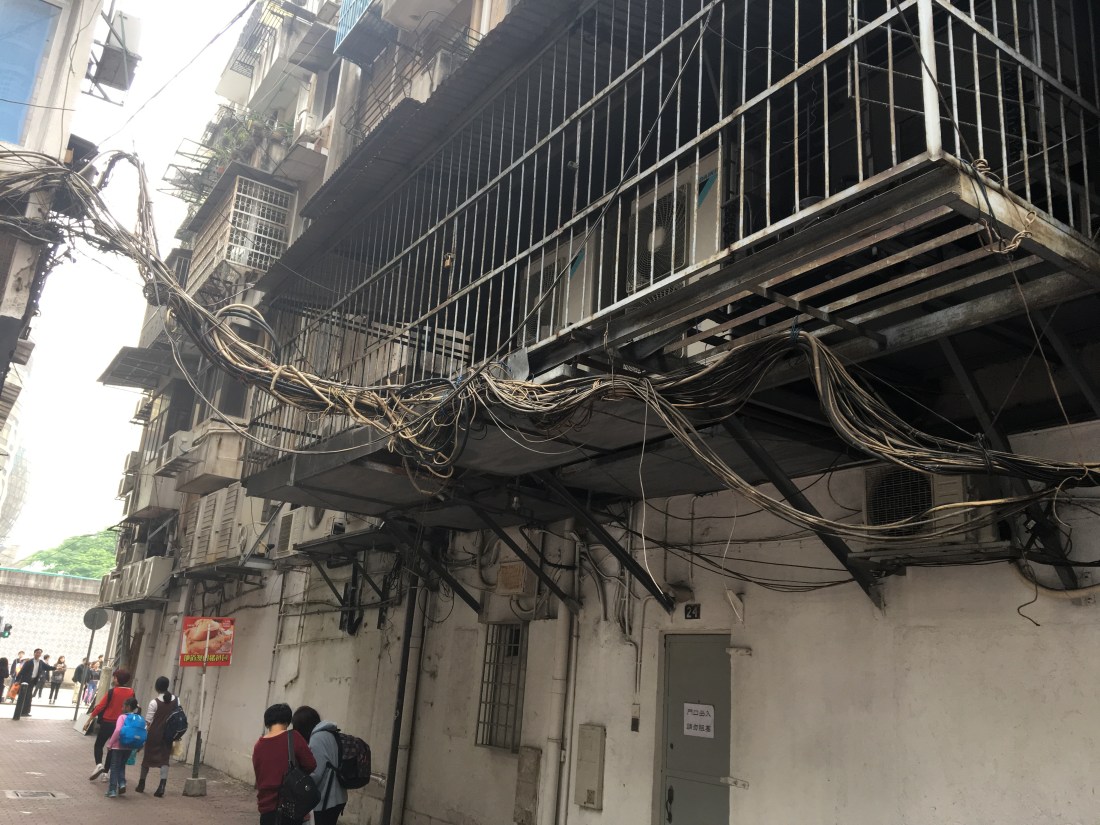


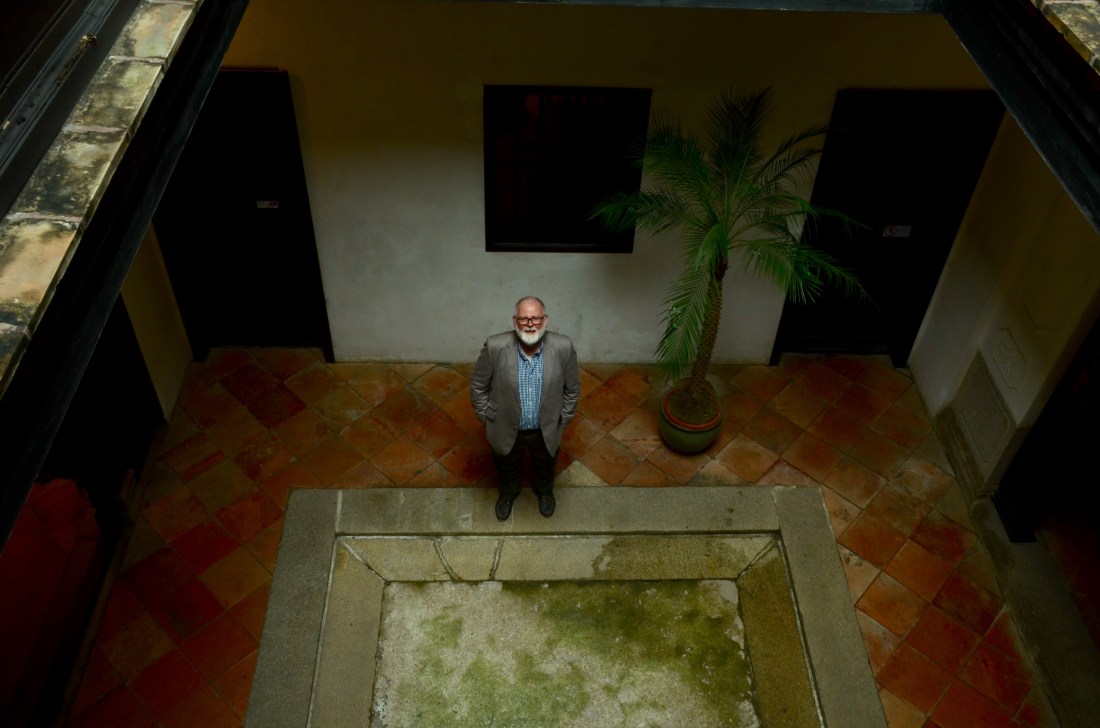 There were many decorative features both internally and externally. Friezes were obviously a major theme of architecture during the building’s heyday, and we liked the way the clay drainage pipes were cast to look like bamboo.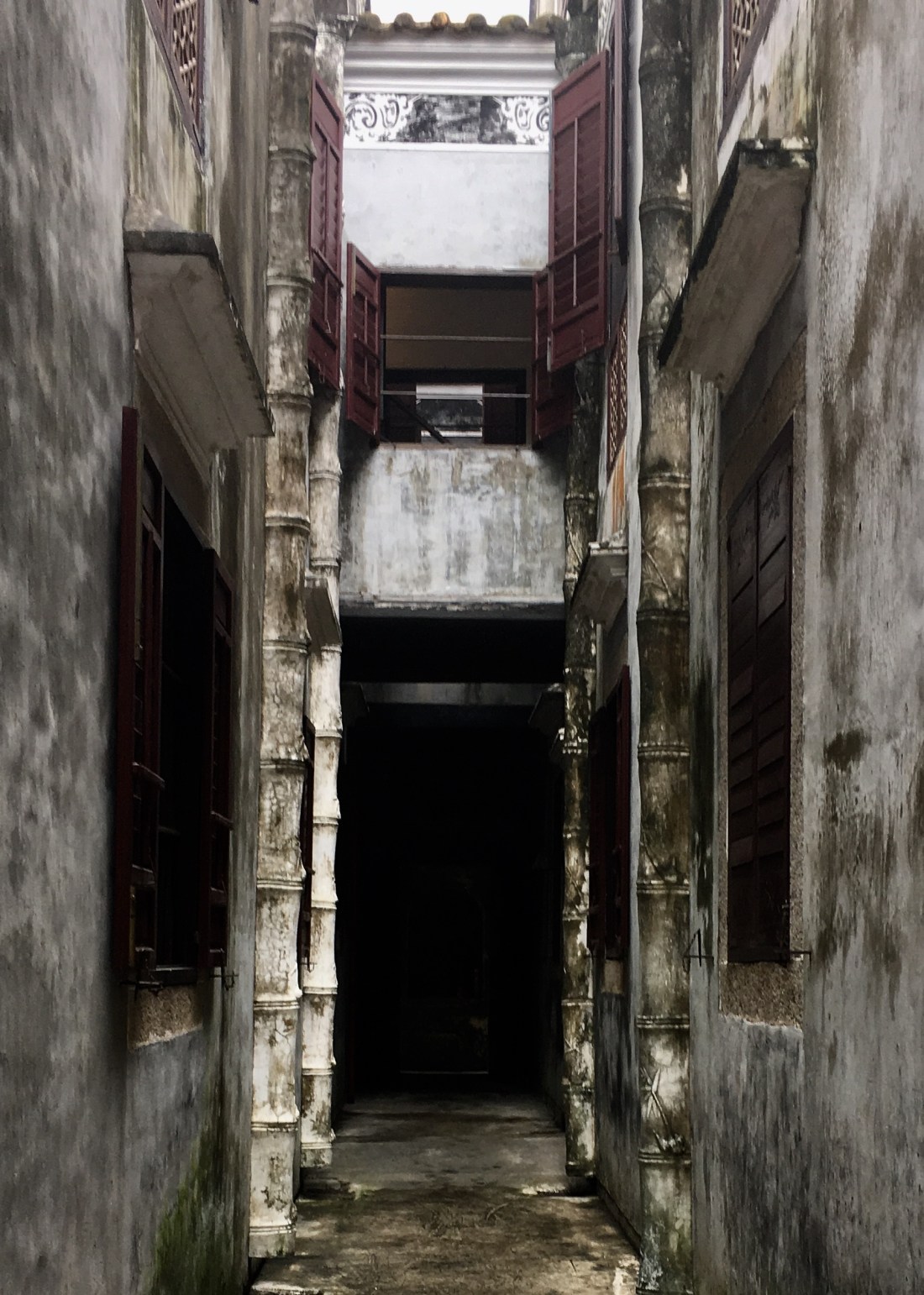


 We spent quite a while wandering around the maze of rooms within the compound, and would definitely recommend a visit here if you find yourself in this part of the world.
 And it just got thicker the higher you walked and, presumably, the bigger the requests in the prayers became. The lampshade-like objects are all incense sticks.


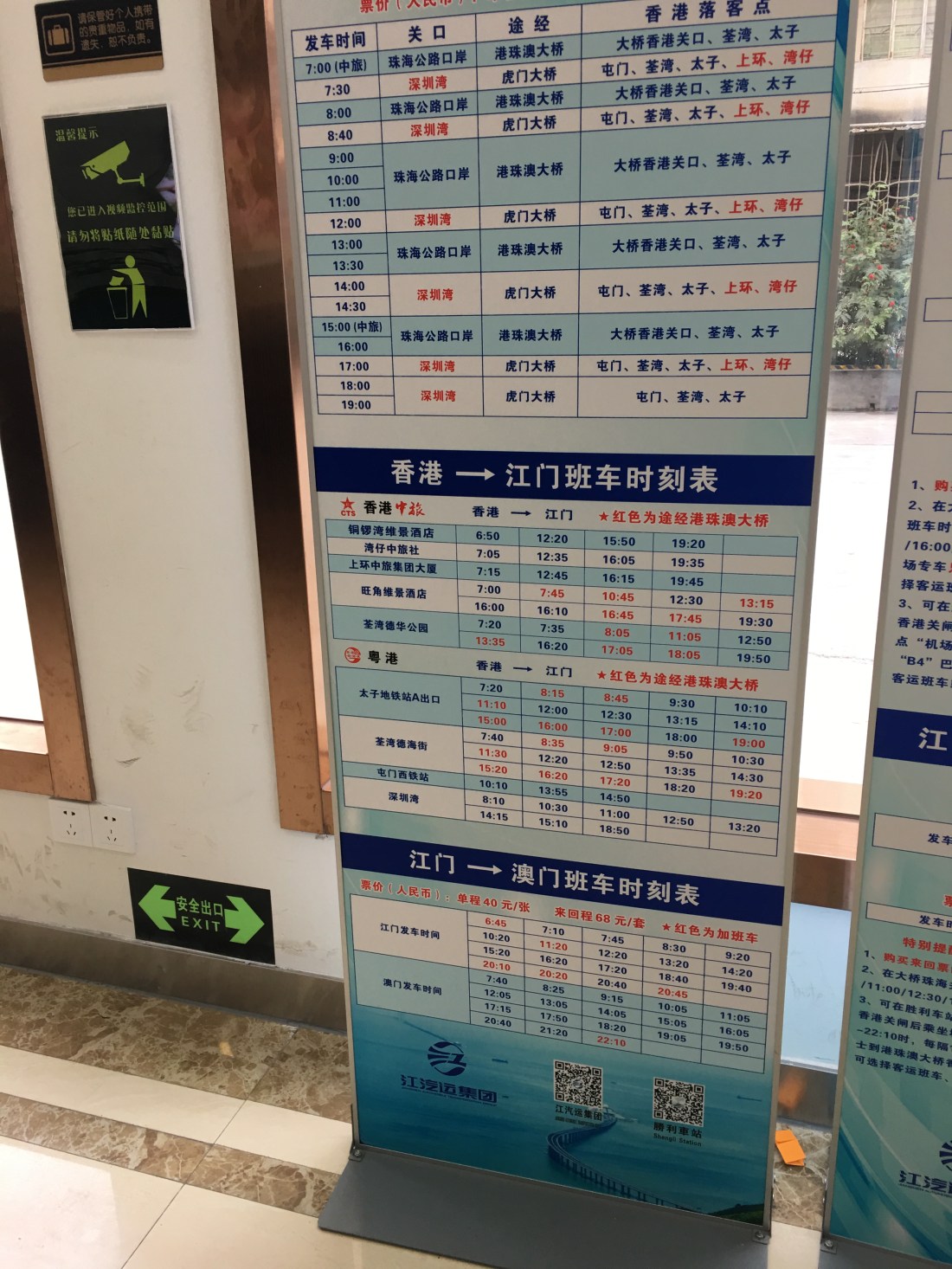 Armed with our photos, we asked the hotel concierge to help us decipher what we were being told. The bottom section – starting at 6:45 – was the list of times of buses to Macau, costing CNY 40 one-way and CNY 68 return. All our worries were over.



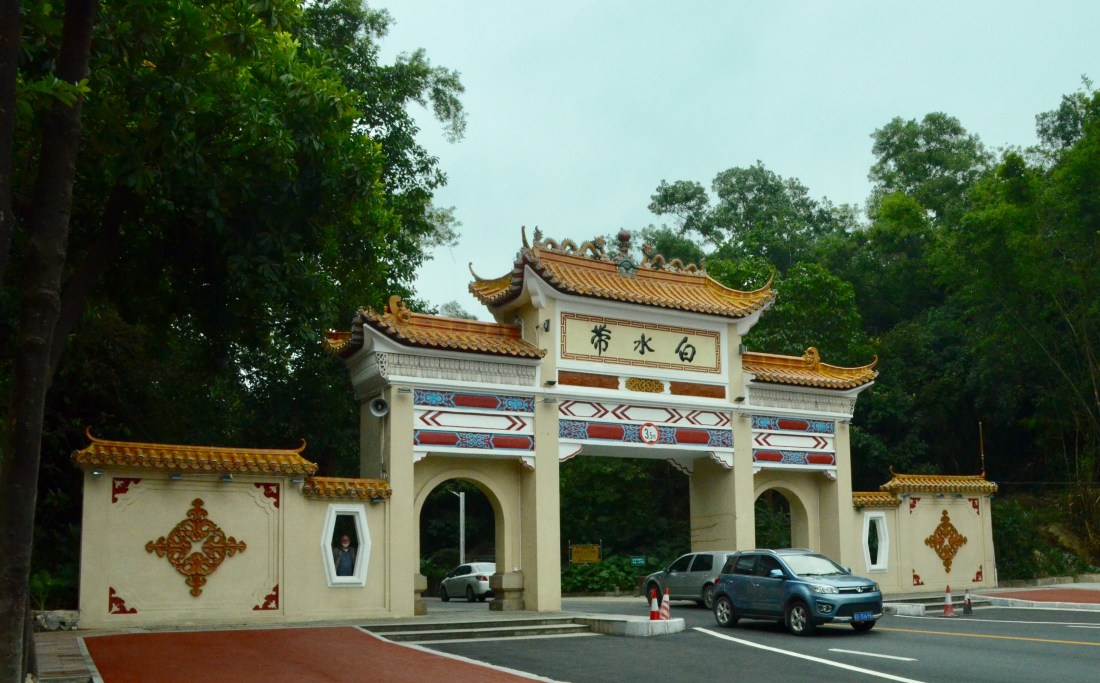
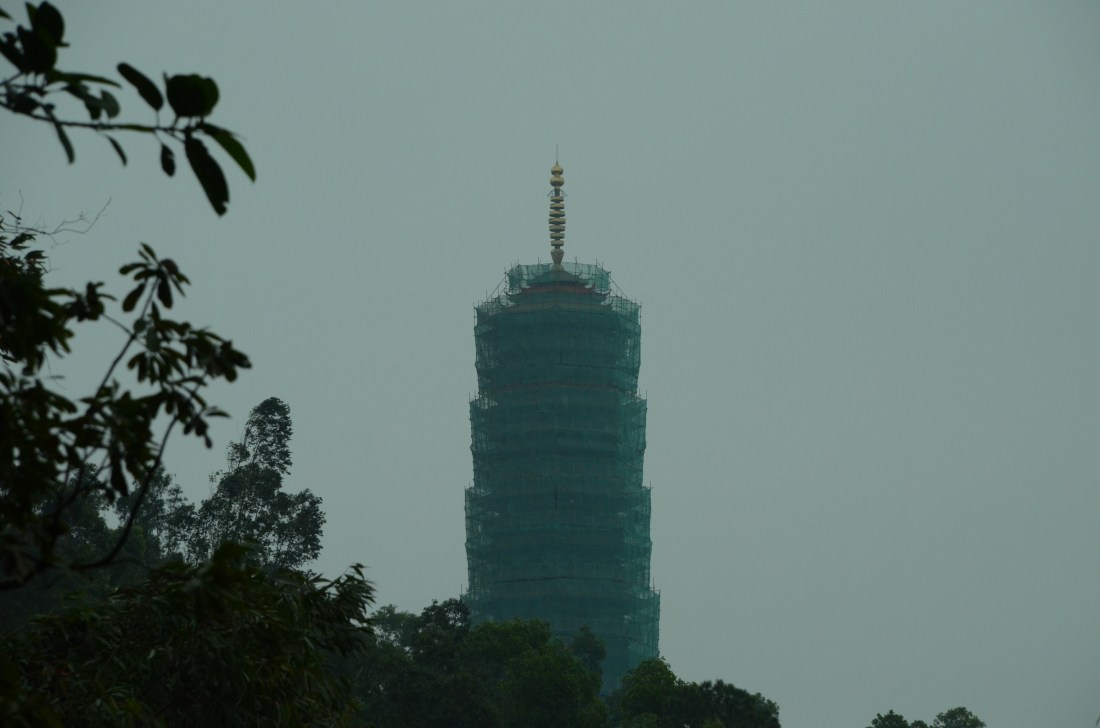 It’s been a theme of our stay in Jiangmen that there is a huge amount of public work underway and the pagoda had obviously been included in the work orders. We’ve been trying to figure out if there’s some kind of state visit or major international sporting event scheduled to take place but haven’t found anything. Anyway, this view of the pagoda was enough to convince us not to travel all the way to the top of the hill. We did carry on to a temple on the hillside which, as luck would have it, had a tiny model of the pagoda outside.
 So that’s what we missed out on.
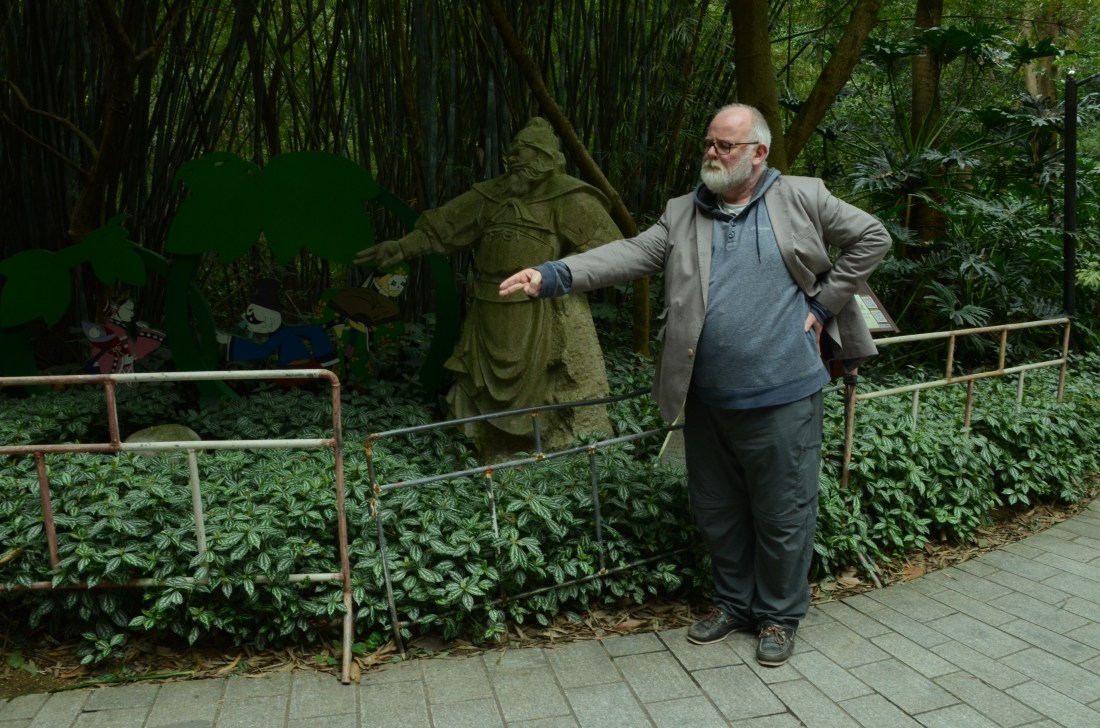 We’re really getting the hang of making our own entertainment here.
 There’s nothing quite like catching sight of a kingfisher. The photo is the best we could get with a small lens. We had decided not to wander around China with the huge telephoto lens and binoculars. I’m sure you’ll understand why.

 It turned out to be a cross between an end of year student art show and an Ideal Home Exhibition. We were again treated like novelties and as we were admiring some jade carvings at one of the stands, a young lady came over to us to explain how they were made. Nothing unusual in that, of course, except two other people also arrived to film the entire exchange. At another point, I turned around to see someone with a camera in my face. I checked behind me to see what he was photographing, but it was me. I think it may be a combination of my size and my facial hair. Maybe they really think I’m Santa.
 We eventually reached the restaurant we were headed for, called Red Garlic and enjoyed an early dinner. The staff in that restaurant speak excellent English so if you’re in Jiangmen and want a break from all the miming, or pointing at pictures of food, this is the place for you.
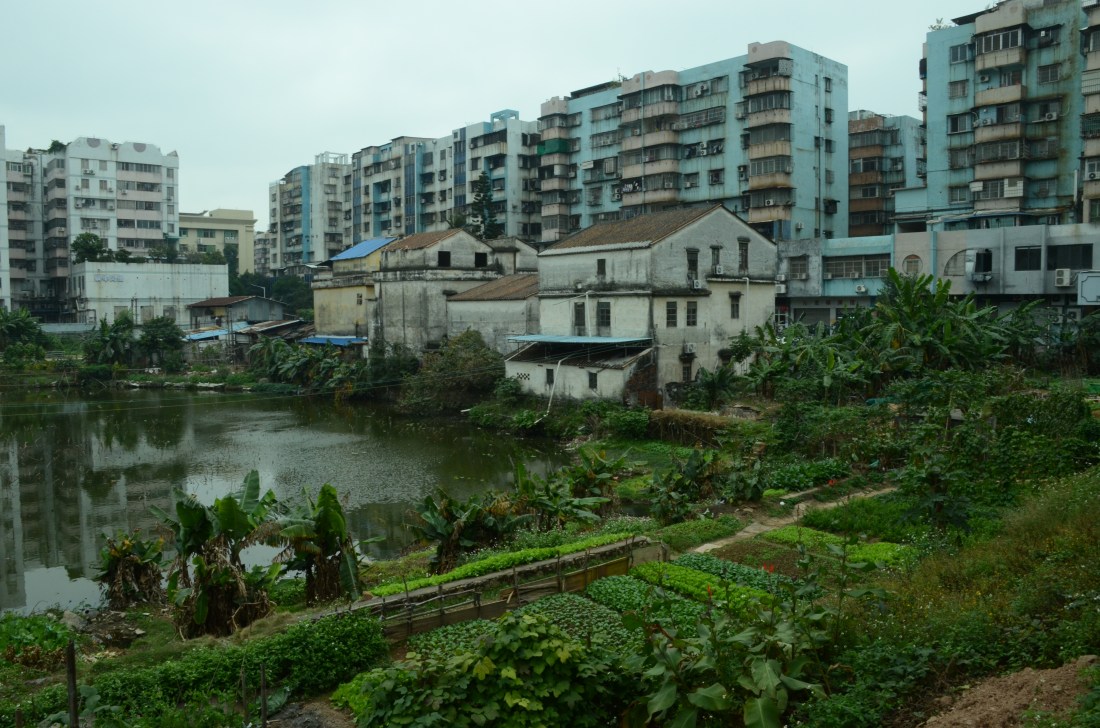
 They’re not maintained as valuable architectural monuments and are still being lived and/or worked in but it’s an interesting contrast with all the new construction in the area around the hotel. The area around Changdi as we walked up Chang’an Road away from the water is altogether more vibrant and lived in than most of the spots we’ve visited so far. The population of Jiangmen is 4.5 million – almost the same number of people as the whole of Scotland – so we had expected to hit a crowded commercial centre at some point and this was it.
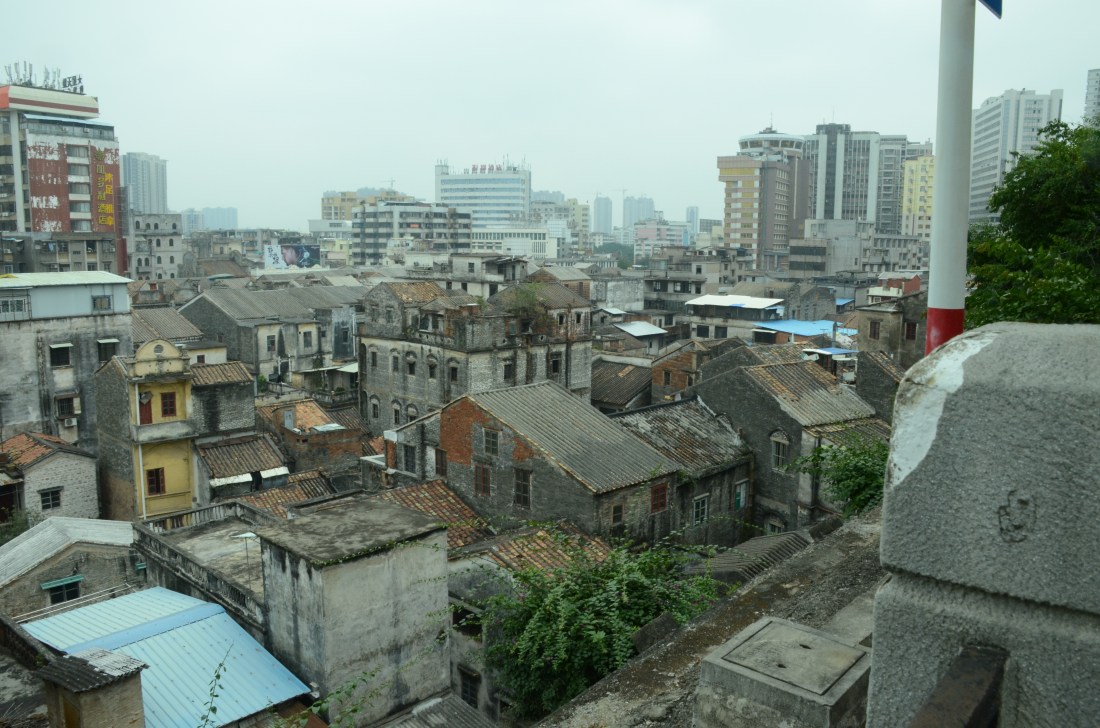 At the top, we encountered a memorial to
 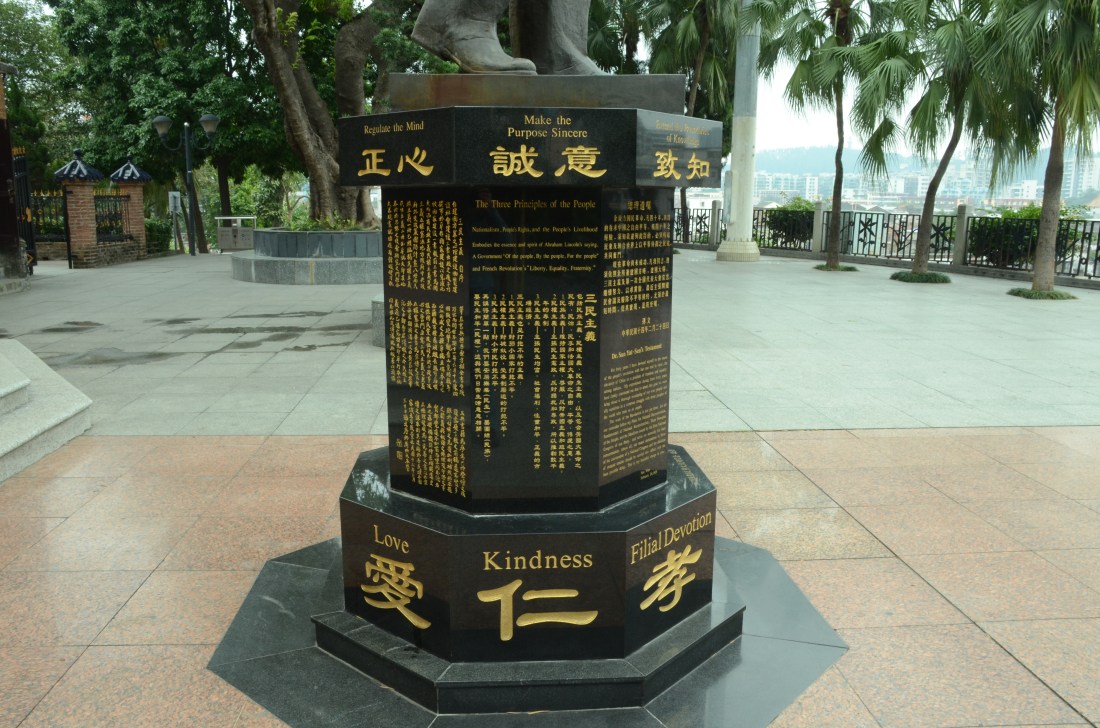 ‘Nationalism, People’s Rights and the People’s Livelihood embodies the essence and spirit of Abraham Lincoln’s saying, a government “of the people, by the people, for the people” and French Revolution’s “Liberty, Equality, Fraternity”. ‘ He had a fascinating life and it would be impossible for me to do justice to his achievements. If you get some time, look him up.
 One thing I’ve noticed about commercial areas here is that competitors in the same field tend to cluster together, much as they used to in London (think Savile Row for tailors or Harley Street for doctors). This makes for an assault on the senses when you encounter the street of mobile phone vendors.
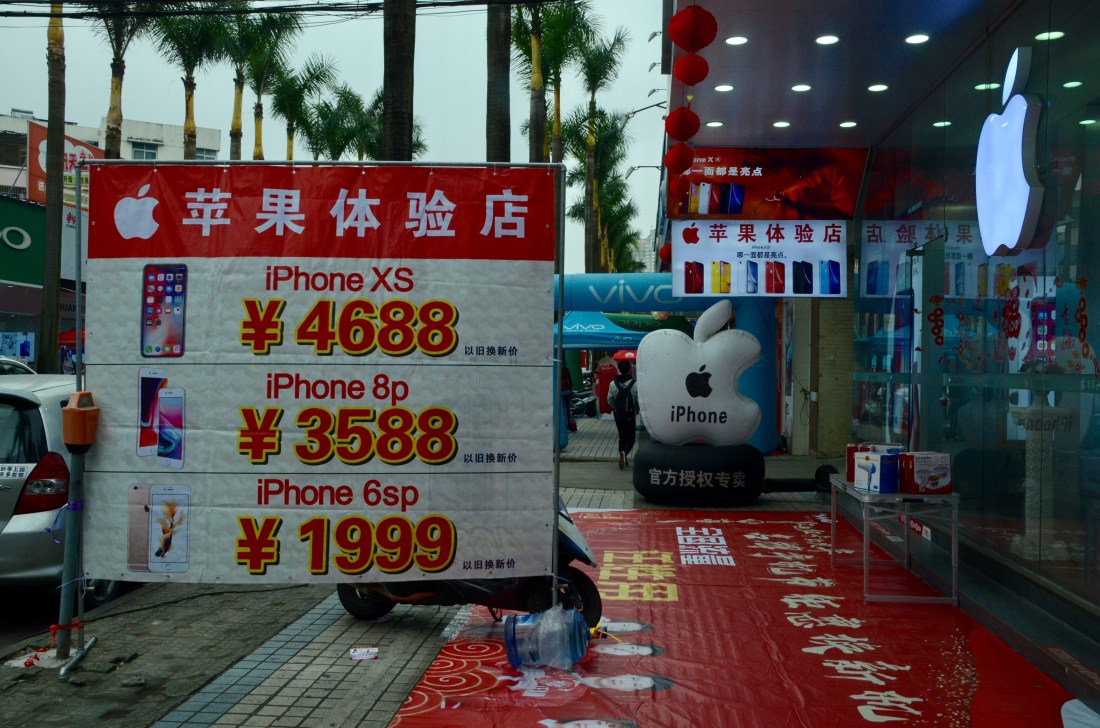 Apart from Apple and, of course, Huawei there are another two equally ubiquitous brands: Vivo and Oppo. This street had a minimum of ten specialist shops for each brand. I assume they find some way of making it work commercially, but it seems unnecessarily over-competitive.
 World After Work