On Monday, we had decided to head inland a little and visit some of Mexico’s most famous Mayan ruins at Chichen Itza. The recommendations we had read were that you should get there early, before the tour buses from the coastal resorts arrived. We decided the easiest way to achieve this was to stay nearby on Monday night and get along early on Tuesday morning. Donald and Azza recommended a couple of places and we plumped for Ik-Kil, a hotel with a cenote on the premises.
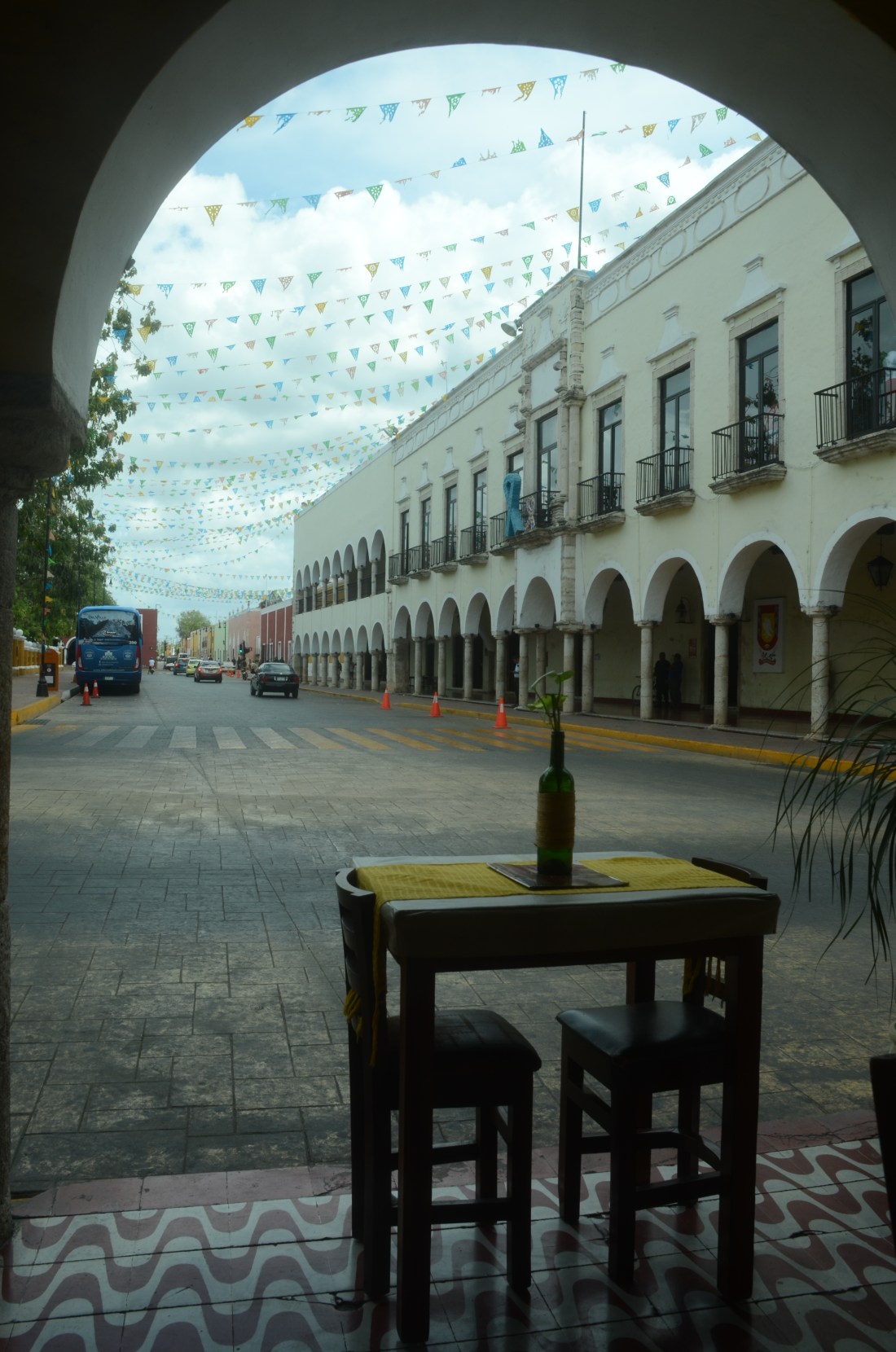
On the way there, we stopped off in Valladolid, named for its Spanish counterpart and established in 1545, just fifty-three years after Columbus’ first transatlantic voyage. The reason for our hiatus here was twofold: we wanted some breakfast, and we were keen to visit Casa de los Venados, a private house which also served as a museum of Mexican folk art. We went to the house first and ascertained that the next tour would be at 11:30am, so we sat down for breakfast at a place just around the corner, called Los Portales.
Nourished, we headed back around to the Casa to take our tour. The house was bought as a ruin by an American named John Venator, who decided to retire to Mexico. (All the cool kids are doing it.) As the house was being restored, he started buying Mexican folk art direct from the artists and acquired an extensive collection. He formed a foundation for the artworks and it’s his intention to leave the house and works to the foundation upon his death. Meanwhile, the place is his home.

From the bench in the reception area, with images of Frida Kahlo and Diego Rivera (that you can sit on) to the specially commissioned card table in the living room,
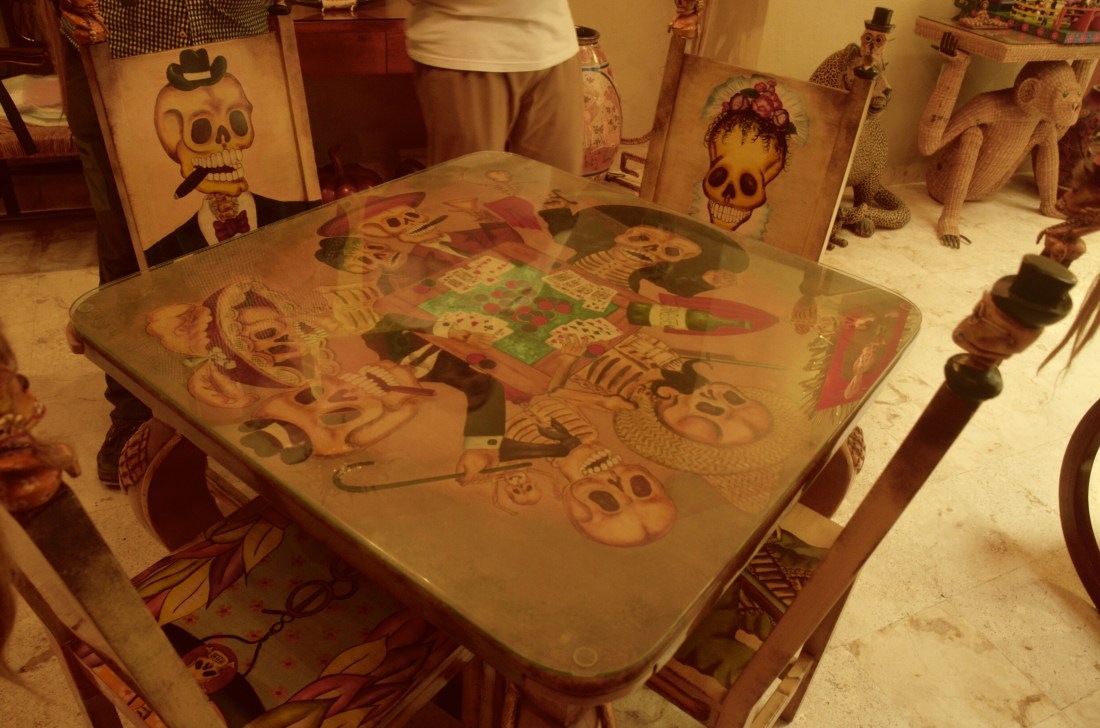
this is a museum where you get up close and personal with the exhibits. There are no roped off areas. The works aren’t buried behind glass or in cabinets. It’s a working private home, where you pass through the sitting rooms, the guest suite bathroom, cross a bridge over the swimming pool and pass by the kitchen counter where the cook was making what smelled like spaghetti bolognese. The art is eclectic, the setup is eccentric, and you should definitely go. Obviously, you can only visit on one of the guided tours, and they take place at 10:00am, 11:30am, and 1:30pm most days.
After our tour, we drove on to Ik Kil, checked in, and were escorted to our bungalow. The setup here was very nice and Ishbel took the camera out on to the porch to see what birds might happen by. She was delighted by what did happen by.

The Mexican Raccoon is also known as the Coatimundi. It may be obscure, but this little fellow led me to today’s post title.
We decided to take a look at the cenote to see if we wanted to have a swim. And promptly decided we didn’t.

There were far too many people in there already for us to want to join them. As we walked back to the bungalow, we encountered a group of Mayan dancers and, of course, we had to get a photo of them with Ishbel.

We had heard that Chichen Itza has a nightly light show at the pyramid so we decided we would head along there early and buy tickets, then have dinner somewhere nearby before the show. Sadly, as has been the case so often for us, the light show takes place from Tuesday to Sunday. I may remember no other Spanish from this trip, but the phrase Martes a Domingo is seared on my memory. We had dinner in a nearby restaurant then headed back to the hotel and called it a night.
When we had checked in, the receptionist had told us that the cenote opened at 8:00am so we decided to grab our snorkels and head up there to see how busy it was.

We spent a half hour swimming around with the entire cenote to ourselves. Very refreshing, and we were certainly awake and ready to face the day by the end of our swim. We showered, changed, breakfasted, and headed along to Chichen Itza. Our cunning plan to beat the tour buses hadn’t been entirely successful as we didn’t arrive until after ten, and there were plenty of buses already there. We bought our tickets and decided to hire a private guide as well to show us around the site. It’s a quite amazing place and was an important city in the Mayan civilization.
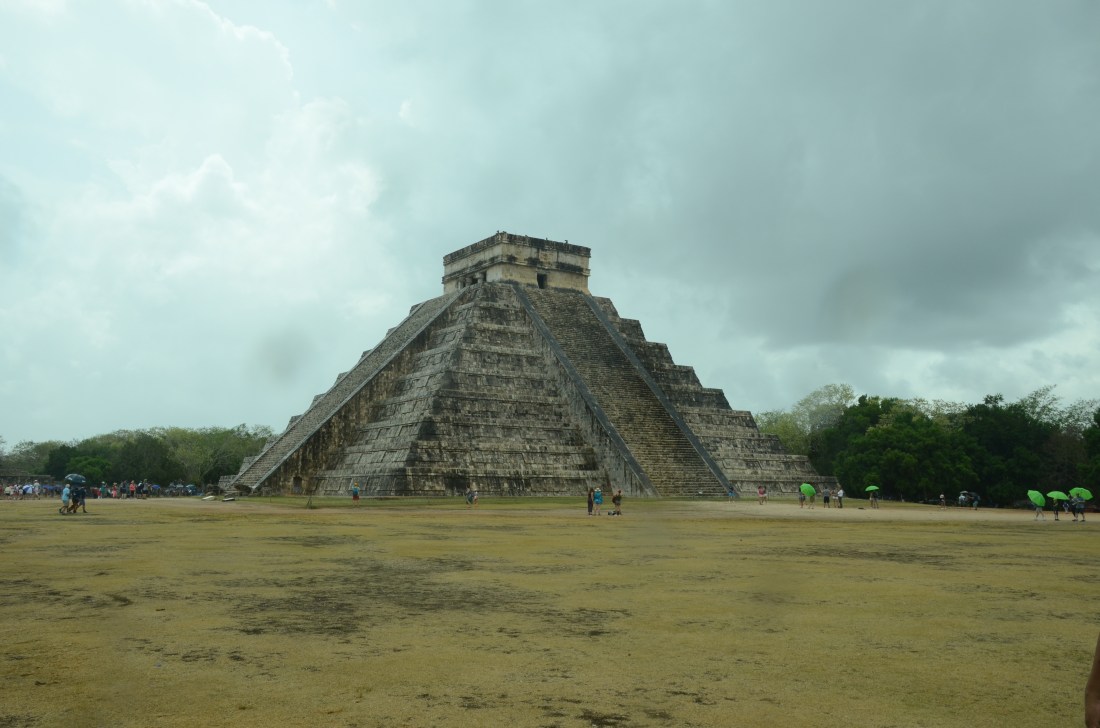 Just as we started our tour, there was a torrential tropical downpour. Our guide cleverly positioned us in the shelter of a tree while explaining some of the site’s salient points so we missed the worst of the rain and dried off quickly once it stopped. The tour lasted over an hour and we picked up a lot of information that we would never had gathered on our own so felt the guide was definitely worthwhile.
After Chichen Itza, we decided we would take the jungle road back past Coba, another site of Mayan ruins. About halfway there, the heavens opened and rain started bucketing down. In the UK, it’s fairly well known that the first rain after a dry spell makes roads very slippery. I was in no hurry to get anywhere so I was perfectly comfortable driving at a much reduced speed. Even then, as I drove I could feel the potential for aquaplaning in some of the accumulated puddles on the road. Some of the local drivers don’t share my caution and I was happy to let them pass, although not so happy with some of the places they chose to do so.
Eventually, we arrived at Coba and the rain had not yet relented. We decided to grab a coffee and snack at the restaurant just next door and sat there watching the rain. A couple of chaps wandered up who had been at the top of teh Coba pyramid as the rain started. And it showed. They were utterly drenched, to the extent that Ishbel felt obliged to offer them the use of our travel towels, which they delightedly and eagerly accepted.
The rain threatened to ease off a couple of times, then started again with renewed vigour so we gave up on the idea of Coba and headed back to Donald and Azza’s place. The whole area had experienced the rain and it was actually cool in the evening. So much so that, for the first time in quite a while, Ishbel needed a blanket to sleep under. We have a dive booked for Wednesday morning. Let’s hope the weather clears up.


 World After Work